
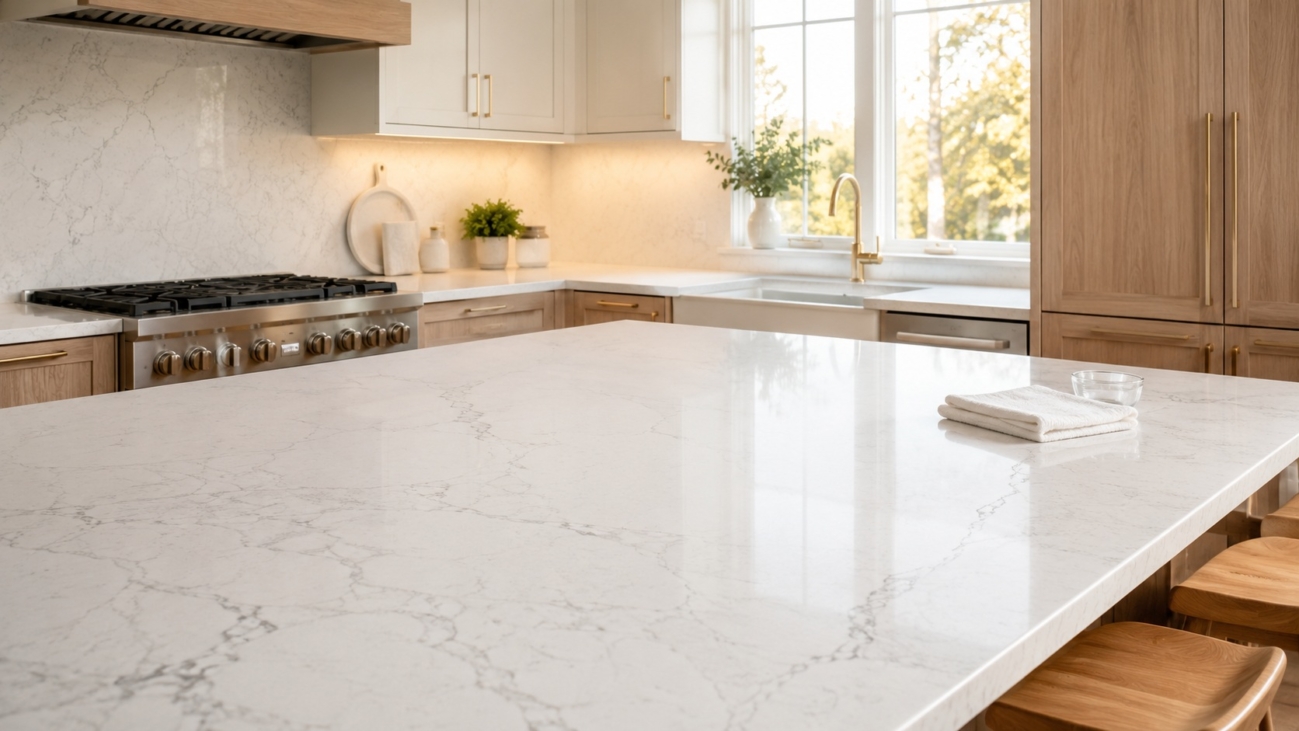
If you are searching for how to remove stains from quartz countertop surfaces without damaging the finish, the first thing to understand is this: quartz is stain-resistant under normal household use, but it still needs the right care. In many Malaysian kitchens, common spills such as coffee, curry, soy sauce, cooking oil, turmeric, sauce, and fruit juice can leave visible marks if they are not cleaned properly.
The good news is that most stubborn stains on quartz countertops can be managed with gentle cleaning methods, patience, and the right habits. This guide explains what to do, what to avoid, and when to ask for professional advice.
Why Quartz Countertops Can Still Show Stains
Quartz Stone is an engineered stone surface made by combining natural quartz with resins, pigments, and other selected materials under high pressure. It is widely used for kitchen countertops, kitchen islands, vanity tops, dining tables, reception counters, and worktops.
For Malaysian homes, quartz is popular because it offers:
- Good stain resistance under normal household use
- Good scratch resistance under normal household use
- Easy day-to-day maintenance
- Consistent colours and patterns
- A wide range of modern design options
- Suitability for wet kitchens, dry kitchens, and kitchen islands
However, no countertop material should be treated as indestructible. Stains can happen when spills are left too long, harsh cleaners are used, or oily residue builds up over time.
Sometimes, what looks like a stain may actually be a surface film, dried food residue, hard water mark, grease layer, or cleaning product build-up.
How to Remove Stains Quartz Countertop Areas Step by Step
Before using stronger cleaning products, always begin with the gentlest method. This protects the quartz surface and helps you understand whether the mark is truly a stain or simply residue sitting on top.
Step 1: Wipe Away Loose Dirt and Residue
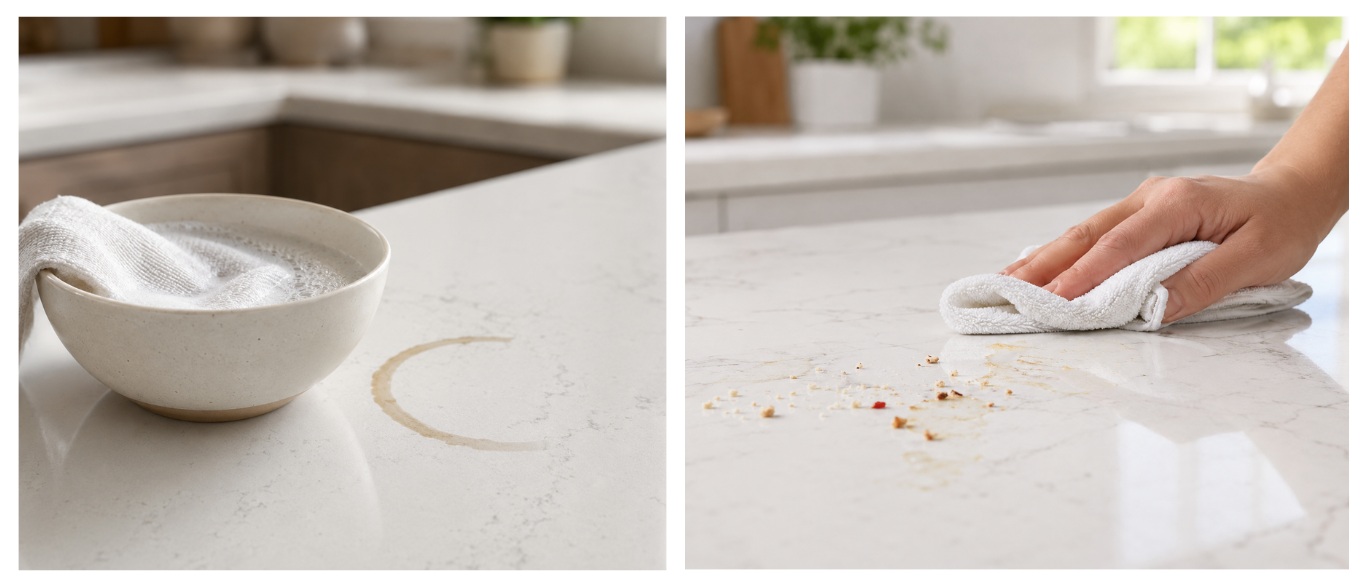
Start by removing crumbs, dust, dried sauce, or loose particles with a soft cloth. Do not scrub immediately with a rough pad.
Use:
- A soft microfibre cloth
- Warm water
- Mild dish detergent
Wipe a larger area around the stain instead of rubbing only one small spot. This helps avoid creating uneven cleaning marks on the surface.
Step 2: Use Warm Water and Mild Detergent
Mix a small amount of mild detergent with warm water. Dampen your cloth and wipe the stained area in gentle circular motions.
This method is suitable for many everyday kitchen marks, including:
- Light food stains
- Sauce marks
- Coffee rings
- Tea stains
- Greasy fingerprints
- Dried water marks
After wiping, rinse with clean water and dry with a soft cloth. Drying is important because leftover moisture can leave dull patches or water marks, especially on darker quartz designs.
Step 3: Let the Cleaner Sit Briefly for Sticky Stains
For sticky residue such as syrup, sauce, or dried food, apply warm soapy water and let it sit for a short while. This softens the residue so it can be wiped away more easily.
Avoid using metal blades or sharp tools. If something is stuck on the surface, use a plastic scraper carefully and gently, keeping it flat against the surface.
Step 4: Repeat Gently Instead of Scrubbing Hard
Stubborn stains are not always solved by force. In fact, aggressive scrubbing can dull the finish or create visible marks.
It is better to repeat a gentle cleaning process a few times than to use harsh chemicals immediately.
A steady approach usually works best:
- Clean with mild detergent
- Rinse with clean water
- Dry with a soft cloth
- Check the stain under natural light
- Repeat if needed
This is especially helpful for light-coloured quartz countertops, where small marks can appear more obvious.
Common Quartz Countertop Stains in Malaysian Kitchens
Different stains need slightly different handling. Here are practical examples for everyday homes.
Coffee, Tea, and Coloured Drinks
Coffee and tea stains are common on kitchen islands and pantry counters. If cleaned quickly, they usually wipe away easily.
For stubborn drink marks:
- Use warm water and mild detergent
- Wipe gently in circular motions
- Rinse properly
- Dry the area fully
Avoid leaving dark drinks overnight, especially on lighter quartz colours.
Curry, Turmeric, and Sauces
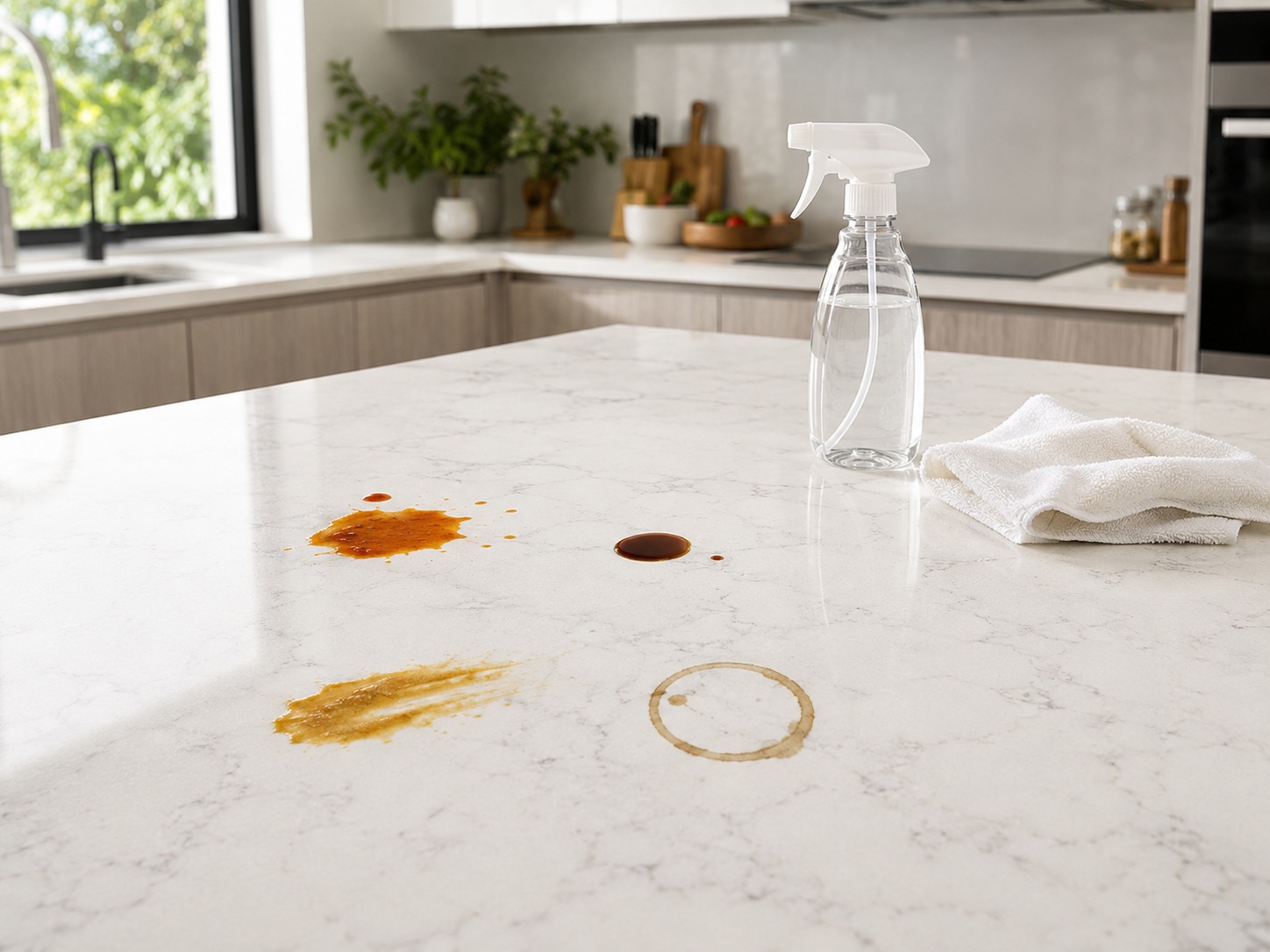
Malaysian cooking often involves strongly coloured ingredients. Curry, turmeric, chilli paste, soy sauce, and tomato-based sauces can leave marks if they sit too long.
Clean spills promptly using a soft cloth and mild detergent. For dried stains, soften the mark first with warm soapy water before wiping.
Do not use bleach or strong acidic cleaners to “burn off” the stain. These may affect the surface appearance.
Cooking Oil and Grease
Grease may not look like a stain at first. Over time, it can form a dull film, especially near cooking zones.
To remove oily residue:
- Use mild dish detergent, as it helps break down grease
- Wipe a wider area around the stain
- Rinse with clean water
- Dry with a soft cloth
For kitchens with frequent heavy cooking, daily wiping makes a big difference.
Hard Water Marks Near the Sink
Water marks are common around sinks, especially when droplets dry on the surface. These marks may look like stains but are often mineral deposits or soap residue.
Use a damp cloth with mild detergent, then rinse thoroughly and dry. The drying step is important because repeated water drying can make the surface look patchy.
Ink, Marker, or Makeup Marks
For marks such as ink, marker, or makeup, avoid panicking and scrubbing immediately.
Start with mild detergent and warm water. If the mark remains, check the quartz supplier’s care guidance or speak to a countertop professional before using stronger cleaners. Different quartz brands and finishes may respond differently.
What Not to Use on Quartz Countertop Stains
Quartz is easy to maintain, but the wrong cleaning method can cause more problems than the original stain.
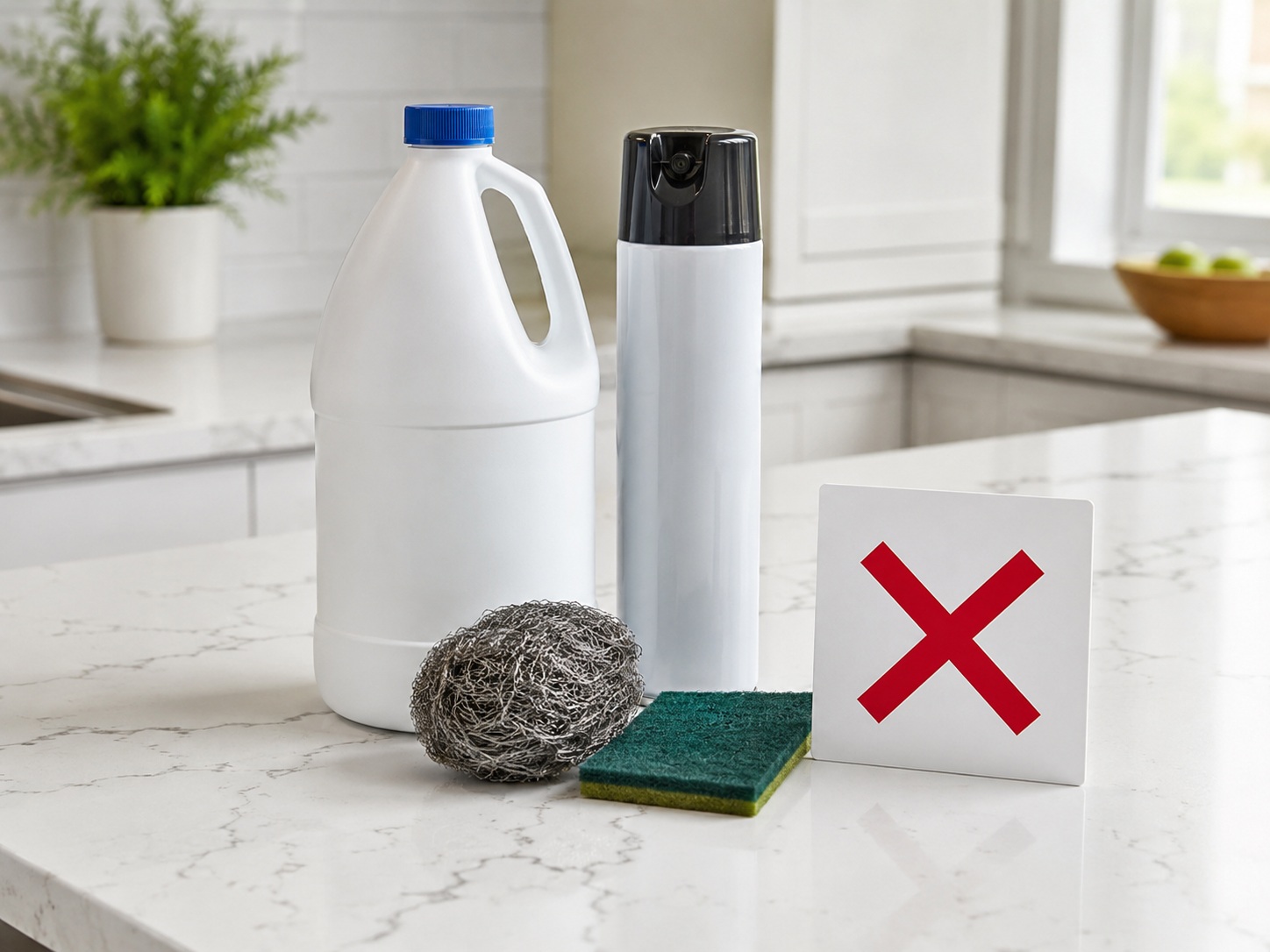
Avoid:
- Bleach
- Oven cleaner
- Drain cleaner
- Strong acidic cleaners
- Highly alkaline cleaners
- Abrasive powders
- Steel wool
- Metal scrapers
- Rough scouring pads
- Paint remover or harsh solvents unless specifically approved for the surface
Also avoid placing very hot cookware directly on quartz countertops. Use trivets for hot pots and pans. Quartz is suitable for everyday kitchen use, but very high direct heat should still be avoided.
How to Prevent Stubborn Stains Before They Happen
The easiest stain to remove is the one that never gets the chance to settle.
Clean Spills Promptly
In a busy kitchen, it is normal to leave small spills while cooking. However, coloured and oily spills should be cleaned as soon as possible.
Pay closer attention to:
- Curry paste
- Turmeric
- Coffee
- Tea
- Red sauces
- Soy sauce
- Cooking oil
- Fruit juice
Prompt cleaning helps protect the surface appearance over the long term.
Use Chopping Boards and Trivets
Quartz countertops are scratch-resistant under normal household use, but it is still best to use chopping boards. This protects both the surface and your knives.
Use trivets for hot cookware. This is especially important in wet kitchens where pots and pans may move quickly from hob to countertop.
Keep a Simple Daily Cleaning Routine
A practical daily routine is enough for most Malaysian households:
- Wipe with a soft cloth
- Use warm water and mild detergent when needed
- Rinse away soap residue
- Dry with a clean cloth
Avoid over-cleaning with strong products. Gentle consistency is better than occasional harsh cleaning.
When a Stain May Need Professional Advice
If a stain does not improve after gentle cleaning, do not keep increasing the strength of the cleaner without checking first.
Professional advice is recommended when:
- The stain has been there for a long time
- The surface looks dull after cleaning
- The mark feels rough or uneven
- The stain is near a joint, edge, or sink area
- You are unsure what cleaner was previously used
- The countertop has a special finish or colour
A countertop specialist can help identify whether the issue is a stain, residue build-up, surface damage, or installation-related detail.
Choosing Quartz With Long-Term Care in Mind
If you are planning a new quartz kitchen countertop, stain care should be part of your material selection discussion.
For example:
- Light quartz designs may show coloured stains more clearly
- Dark quartz designs may show water marks or fingerprints more easily
- Busy patterns can help hide minor daily marks
- Polished finishes may look different from matte finishes under kitchen lighting
- Wet kitchens may need more practical colours and patterns than dry kitchens
SolidTop Sdn Bhd provides countertop design, material supply, custom fabrication, and professional installation for residential and commercial spaces. For homeowners, interior designers, architects, contractors, and property owners in Klang Valley, the right quartz selection should balance appearance, usage habits, maintenance expectations, and long-term value.
Conclusion: Remove Stains Quartz Countertop Surfaces With Gentle, Consistent Care
The safest way to remove stains from quartz countertop surfaces is to start gently: warm water, mild detergent, a soft cloth, proper rinsing, and complete drying. Most everyday marks from food, drinks, oil, and water can be handled with calm, consistent cleaning.
Quartz Stone is a practical and elegant choice for many Malaysian kitchens because it is stain-resistant under normal household use and easy to maintain with proper care. Still, it should be treated with reasonable protection. Clean spills promptly, use chopping boards, place trivets under hot cookware, and avoid harsh chemicals.
If you are dealing with a stubborn stain or planning a new quartz countertop, SolidTop Sdn Bhd is happy to guide you with professional material advice, customised fabrication, and practical recommendations for your kitchen or commercial space.
What is the safest way to remove stains from quartz countertop surfaces?
The safest method is to start with warm water, mild detergent, and a soft cloth. Wipe gently, rinse with clean water, and dry the surface fully. Avoid harsh chemicals or abrasive pads unless the quartz supplier confirms they are suitable.
Can curry or turmeric stain a quartz countertop?
Quartz is stain-resistant under normal household use, but strong-coloured ingredients such as curry and turmeric may leave marks if left too long. Clean spills promptly with mild detergent and warm water.
Should I use bleach to remove stubborn stains from quartz?
No. Bleach and harsh chemical cleaners may affect the surface appearance. Use gentle cleaning methods first and seek professional advice if the stain remains.
Why does my quartz countertop look dull after cleaning?
Dullness may come from grease, soap residue, hard water marks, or unsuitable cleaning products. Rinse the surface properly and dry it with a soft cloth. If the dull patch remains, ask a countertop professional for advice.
Is quartz suitable for a wet kitchen in Malaysia?
Yes, quartz is suitable for many wet kitchens and dry kitchens in Malaysia, depending on cooking habits, colour selection, and proper care. For heavy cooking, discuss your usage needs before selecting the design and finish.
Add a Comment