
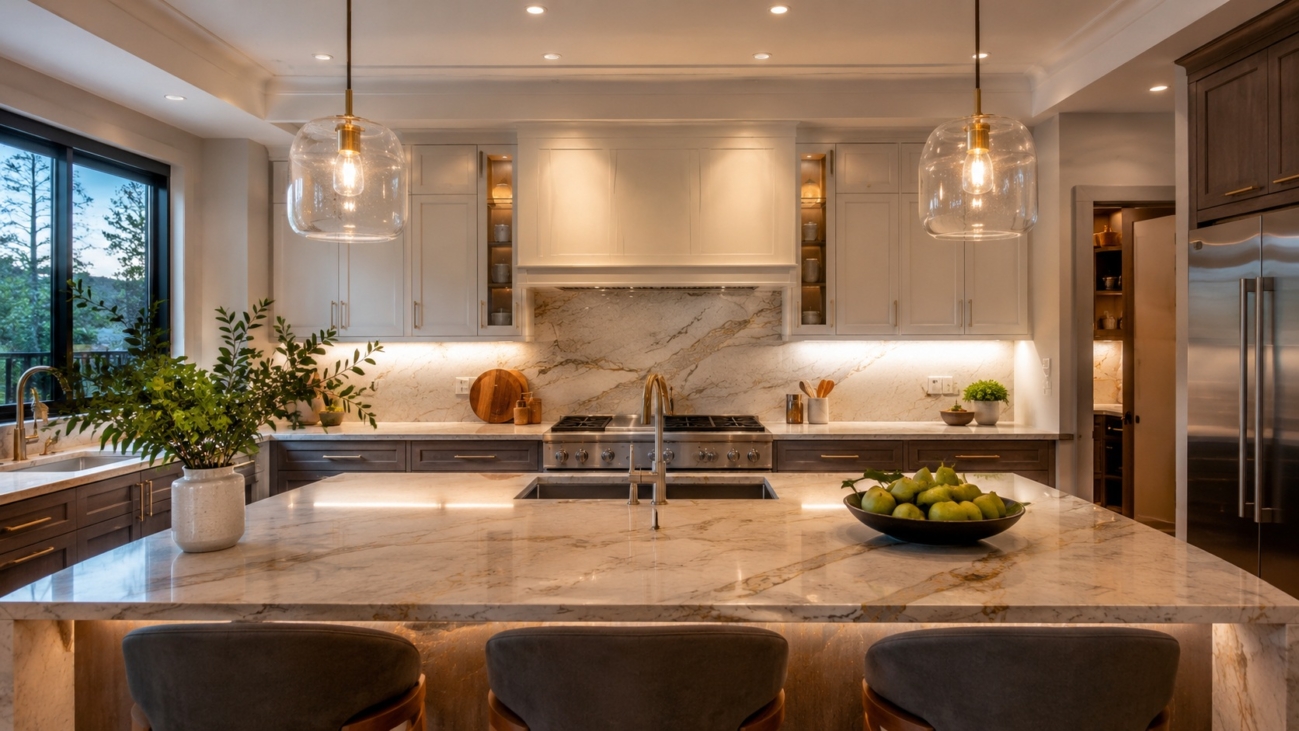
A Kitchen Island Countertop is more than an extra surface in the kitchen. In many Malaysian homes, it becomes the centre of daily life: morning coffee, casual meals, food preparation, homework, hosting friends and sometimes even work-from-home moments.
That is why the countertop material you choose for your island matters. But one design question often comes up during renovation planning:
Should your kitchen island countertop match the rest of your kitchen countertops, or should you mix materials for contrast?
Both approaches can look beautiful. The better choice depends on your kitchen layout, design style, cooking habits, maintenance expectations and the feeling you want your kitchen to create.
Why Your Kitchen Island Countertop Deserves Special Attention
The island usually sits in the most visible part of the kitchen. Even before people notice the cabinets, appliances or backsplash, the island often catches the eye first.
In open-concept Malaysian homes, especially condominiums, terrace houses and modern semi-D layouts, the kitchen island may connect the dry kitchen, dining area and living space. This makes it both a functional worktop and a design feature.
A well-planned island can help you:
- Create a stronger kitchen focal point
- Add more preparation space
- Improve kitchen workflow
- Provide casual seating
- Separate the kitchen from the living or dining area
- Showcase a premium stone surface beautifully
Because of this, your island countertop should not be selected as an afterthought. It should be planned together with your cabinet colour, main countertop, lighting, flooring and overall interior style.
Should Your Kitchen Island Countertop Match the Main Countertop?
Matching materials means using the same countertop surface for both the island and the surrounding kitchen counters. This is a popular choice for homeowners who prefer a clean, coordinated and timeless look.
When Matching Works Best
A matching kitchen island countertop is suitable when you want the kitchen to feel calm, elegant and visually seamless.
This approach works especially well for:
- Smaller kitchens where too much contrast may feel busy
- Minimalist interiors
- Modern white, grey or neutral kitchens
- Open-concept layouts where visual balance is important
- Homeowners who prefer a safe and long-lasting design direction
For example, if your dry kitchen uses a soft white quartz countertop with subtle veining, continuing the same material on the island can make the whole space feel brighter and more spacious.
Quartz Stone is often chosen for this kind of matching design because it offers consistent colour and pattern, a wide range of designs and easy day-to-day maintenance under normal household use.
Benefits of Matching Materials
Matching your island and main countertop gives the kitchen a polished and intentional look. It is especially helpful when the cabinet design already includes strong details, such as fluted panels, glass doors, bold handles or feature lighting.
The main advantages include:
- A cleaner visual flow
- Easier coordination with cabinets and backsplash
- A timeless look that is less trend-dependent
- Better balance in compact kitchens
- A more unified appearance for open-plan homes
If your goal is a kitchen that feels premium, calm and easy to live with, matching is often the more practical choice.
When Mixing Materials Creates a More Stylish Kitchen Island Countertop
Mixing materials means choosing a different countertop design, colour, finish or stone type for the island compared to the main countertop.
This approach is more expressive. It gives your kitchen personality and makes the island stand out as a centrepiece.
When Mixing Works Best
A mixed kitchen island countertop works beautifully when the island is meant to be a design feature.
This is suitable for homeowners who want:
- A statement island
- A luxury-inspired kitchen
- A more customised design
- Visual contrast between wet and dry kitchen zones
- A stronger connection between the kitchen and dining area
For example, you may choose a darker stone surface for the island while keeping the surrounding countertop light. Or you may use a marble-look quartz island with plain cabinetry to create a boutique hotel feel at home.
This style is especially attractive in larger kitchens where there is enough space for contrast to breathe.
Benefits of Mixing Materials
Mixing countertop materials can make the kitchen feel more layered, modern and personalised.
The benefits include:
- A stronger focal point
- More design character
- Better separation between cooking and social areas
- More flexibility in colour pairing
- A high-end customised appearance
In I Mode terms, this is where the kitchen starts to feel like “your space”, not just a functional room. The island can become the place where your design personality shows.
Matching vs Mixing: Which Is Better for Malaysian Homes?
There is no single answer. A matching countertop is not always better than a mixed one, and a mixed countertop is not automatically more stylish.
The right choice depends on how your kitchen is used.
Choose Matching If You Prefer a Calm, Timeless Look
Matching is usually better if you want your kitchen to look coordinated for many years.
It is also a good option if:
- Your kitchen is compact
- Your cabinets already have a strong colour
- Your backsplash is decorative
- You prefer simple maintenance planning
- You want a neat, uncluttered design
For many Malaysian homes, especially apartments and terrace houses, matching materials can help the kitchen feel more open and organised.
Choose Mixing If You Want the Island to Stand Out
Mixing is ideal if the island is the “wow” feature of the kitchen.
It works well if:
- Your kitchen has a spacious layout
- You enjoy bold interior design
- Your cabinets are simple or neutral
- You want the island to feel like a dining or entertaining zone
- You are comfortable coordinating colours carefully
The key is not to mix randomly. The materials should still feel connected through colour tone, pattern, finish or design style.
Popular Material Ideas for Kitchen Islands
Different stone surfaces create different moods and practical benefits. Here are some common options to consider.
Quartz Stone for a Modern, Practical Island
Quartz Stone is a popular choice for kitchen islands because it is suitable for everyday kitchen use, easy to maintain and available in many colours and patterns.
It is a good option for homeowners who want:
- A modern kitchen appearance
- Consistent pattern and colour
- Scratch resistance under normal household use
- Stain resistance under normal household use
- Simple day-to-day cleaning
For Malaysian kitchens, quartz countertops are commonly supplied in 15mm and 20mm thicknesses. The right option depends on the design, cabinet support and fabrication details.
Quartz is especially useful when you want either a matching look or a controlled contrast.
Granite Stone for Natural Character
Granite Stone brings natural movement and unique patterning. Every slab has its own character, which makes it appealing for homeowners who enjoy a more organic, premium look.
Granite can work well for island countertops where the natural stone pattern becomes part of the kitchen’s personality. Where relevant, granite is commonly considered from 18mm and above.
As with any natural stone, proper care and professional installation are important for long-term performance.
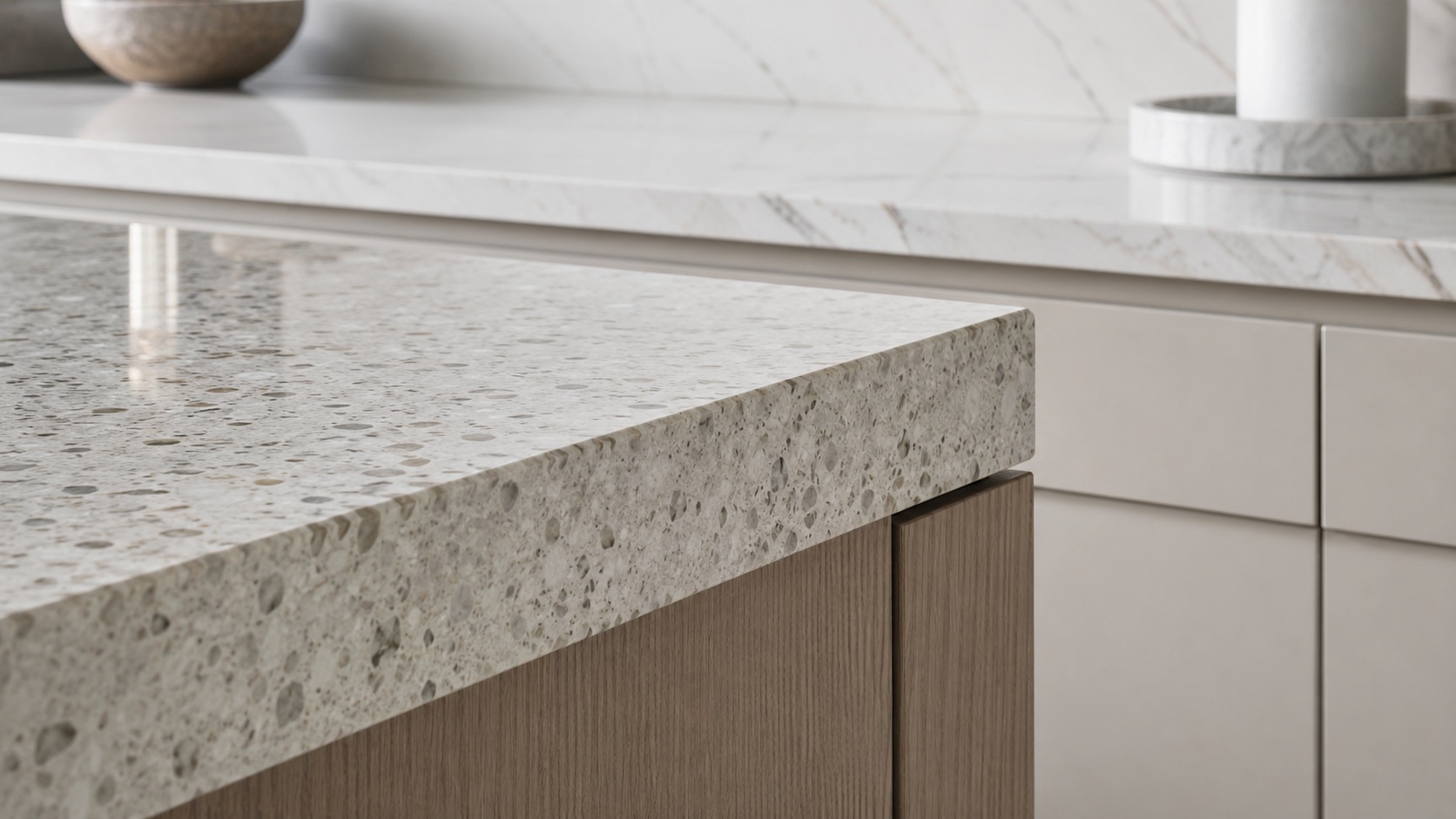
Marble Stone for Elegant Feature Areas
Marble has a classic luxury appearance, especially for homeowners who love soft veining and natural beauty.
However, marble requires more care than many engineered surfaces. It may be more sensitive to staining, etching and scratches depending on usage and maintenance. For this reason, it is often better suited to homeowners who appreciate natural ageing and are willing to care for the surface properly.
If you love the marble look but want easier day-to-day maintenance, marble-look quartz may be worth considering.
Sintered Stone for a Sleek Contemporary Look
Sintered Stone can create a slim, modern and architectural appearance. It is often chosen for contemporary kitchens, large-format surfaces and refined design concepts.
It can be suitable for homeowners who want a sophisticated island with a clean visual effect. As always, the final recommendation should depend on application, fabrication requirements and project details.
How to Mix Materials Without Making the Kitchen Look Messy
A mixed island countertop should feel intentional. The goal is contrast, not confusion.
Keep One Element Consistent
If the island countertop is different, keep another design element consistent.
For example:
- Match the island countertop tone with the backsplash
- Repeat the same cabinet handle finish
- Use similar veining colours
- Keep the same surface finish across both countertops
- Use lighting to visually connect the spaces
This helps the kitchen feel designed, not randomly assembled.
Balance Pattern with Plain Surfaces
If your island countertop has dramatic veining, keep the surrounding surfaces quieter.
A bold stone pattern needs room to shine. Pairing it with too many other strong elements can make the kitchen feel crowded.
A good rule is simple: let one feature lead.
If the island is the star, allow the cabinets, backsplash and main countertop to support it.
Consider Your Cabinet Colours
Cabinet colour can decide whether matching or mixing feels right.
Light cabinets with a light countertop create a soft and airy look. Dark cabinets with a lighter island surface can feel bold and elegant. Wood-look cabinets can pair beautifully with stone surfaces that have warm undertones.
For Malaysian homes, neutral palettes such as white, grey, beige-grey, taupe, charcoal and wood tones remain practical because they work well with many interior styles.
Practical Questions Before You Decide
Before choosing your island material, ask these questions:
- Will the island be used mainly for preparation, seating or entertaining?
- Is the island close to the cooking area or more of a dry kitchen feature?
- Do you prefer a quiet design or a statement piece?
- How much natural light does the kitchen receive?
- Are your cabinets plain, textured or strongly coloured?
- Do you want the countertop to blend in or become the first thing people notice?
These questions help narrow the choice before looking at stone samples.
It is also useful to view samples under your actual home lighting. A surface that looks warm in a showroom may look cooler under white LED lights, and a subtle pattern may appear stronger across a large island.
Workmanship Matters as Much as Material Choice
A beautiful island countertop depends not only on the stone, but also on measurement, fabrication, edge profile, support and installation.
For islands, details such as overhang, joint placement, waterfall edges, seating comfort and cabinet support must be planned properly.
Common edge profiles include straight edge, pencil edge, bevel edge, bullnose edge and waterfall edge for islands. The right edge profile should match the material, cabinet style and daily usage.
SolidTop Sdn Bhd provides countertop design, material supply, custom fabrication and professional installation for residential and commercial spaces, mainly serving Klang Valley. This one-stop approach helps homeowners coordinate both design and practical details with better clarity.
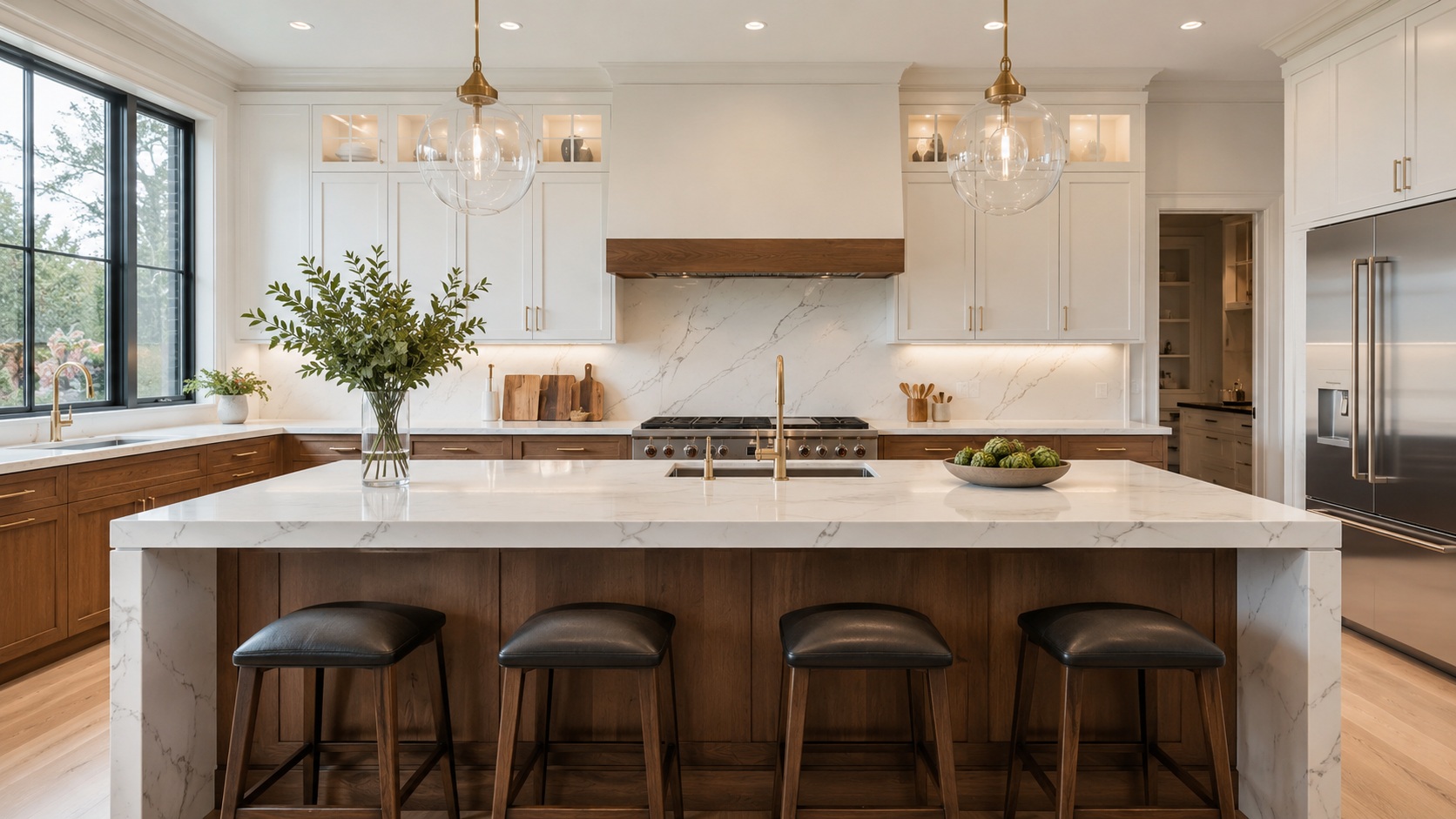
Conclusion: The Best Kitchen Island Countertop Is the One That Fits Your Lifestyle
A matching Kitchen Island Countertop is ideal if you want a clean, elegant and timeless kitchen. A mixed island countertop is perfect if you want a stronger design statement and a more personalised space.
The best answer depends on your kitchen size, cabinet colour, lighting, cooking habits and overall interior direction.
If you are unsure, start with this simple guide: match for calmness, mix for character. Then refine the material choice with professional advice, real samples and proper site measurements.
Need help choosing the right island countertop for your home? SolidTop Sdn Bhdsolidtop.com.my is happy to guide you through suitable stone options, colour matching, fabrication details and installation planning.
Is it better to match or mix a kitchen island countertop?
Both can work well. Matching creates a cleaner and more timeless look, while mixing creates a stronger focal point. The better choice depends on your kitchen size, cabinet colour, lighting and design preference.
What material is suitable for a kitchen island countertop?
Quartz Stone, Granite Stone, Marble Stone and Sintered Stone can all be considered depending on usage and design goals. Quartz Stone is popular for modern homes because it is easy to maintain and suitable for everyday kitchen use under normal household conditions.
Can I use a different colour for my island countertop?
Yes. A different island colour can make the kitchen look more customised. To keep the design balanced, connect the island colour with another element such as cabinet tone, backsplash, flooring or lighting.
Is a waterfall edge suitable for a kitchen island?
A waterfall edge can create a premium, modern island feature. It works best when the stone pattern, cabinet structure and installation details are properly planned by an experienced countertop team.
Should I choose quartz for a kitchen island?
Quartz Stone is a practical option for many Malaysian kitchen islands because it offers consistent design, good resistance under normal household use and easy day-to-day maintenance. Final suitability depends on your kitchen layout and usage.
Add a Comment