
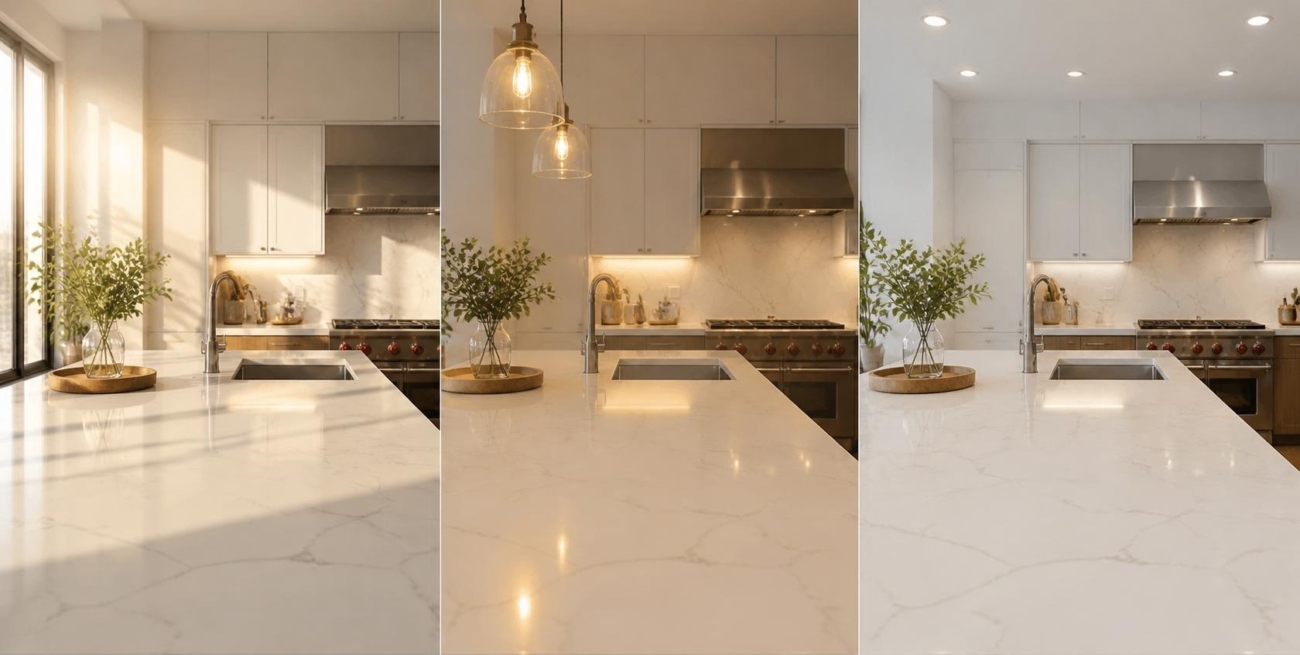
Quartz Countertop Lighting plays a bigger role than many homeowners realise. The same quartz slab can look warmer, cooler, brighter, softer, more dramatic or more subtle depending on the lighting in your kitchen. This is especially important in Malaysian homes, where kitchens often combine natural daylight, ceiling lights, under cabinet lighting and different cabinet colours in one space.
Quartz Stone is an engineered stone surface made by combining natural quartz with resins, pigments and other carefully selected materials under high pressure. It is widely used for kitchen countertops, kitchen islands, bathroom vanity tops, dining tables, reception counters and commercial worktops.
Because quartz is available in many colours and patterns, lighting can influence how the final surface appears after installation. A white quartz countertop may look crisp under cool lighting but slightly creamy under warm lighting. A grey quartz surface may look soft and neutral in daylight but deeper and moodier at night. Veining may appear more obvious under directional lighting, while a uniform pattern may look smoother under diffused lighting.
For homeowners, interior designers, architects and contractors, understanding lighting helps reduce design surprises. It also helps you choose quartz colours more confidently before fabrication and installation.
How Quartz Countertop Lighting Changes Colour Perception
Quartz Countertop Lighting affects colour perception because every light source has its own colour temperature, brightness level and colour rendering quality. These factors change how the eye reads the countertop surface.
In simple terms, your quartz countertop does not exist visually on its own. It is always seen together with:
- The light source
- Cabinet colours
- Wall colour
- Flooring
- Backsplash material
- Window direction
- Reflection from nearby surfaces
This is why a quartz sample may look slightly different in a showroom, at home during the day, and again at night under LED lighting.
Colour Temperature: Warm, Neutral And Cool Light
Colour temperature is usually measured in Kelvin. In practical kitchen design, it is commonly understood as warm light, neutral light or cool light.
Warm lighting gives a yellowish tone. It can make cream, beige, warm white and brown-based quartz look softer and more inviting. However, it may also make some white quartz surfaces appear less crisp.
Neutral lighting gives a more balanced appearance. It is often suitable when homeowners want the quartz colour to look close to its intended tone without becoming too yellow or too blue.
Cool lighting gives a whiter or slightly bluish tone. It can make a modern kitchen look cleaner and brighter, especially with white or grey quartz. However, if overused, cool lighting may make some spaces feel clinical or harsh.
For Malaysian homes, the right choice depends on the kitchen style. A warm timber kitchen may benefit from warmer or neutral lighting, while a modern grey-and-white kitchen may suit neutral lighting better. The key is to test your quartz sample under the same lighting condition you plan to use at home.
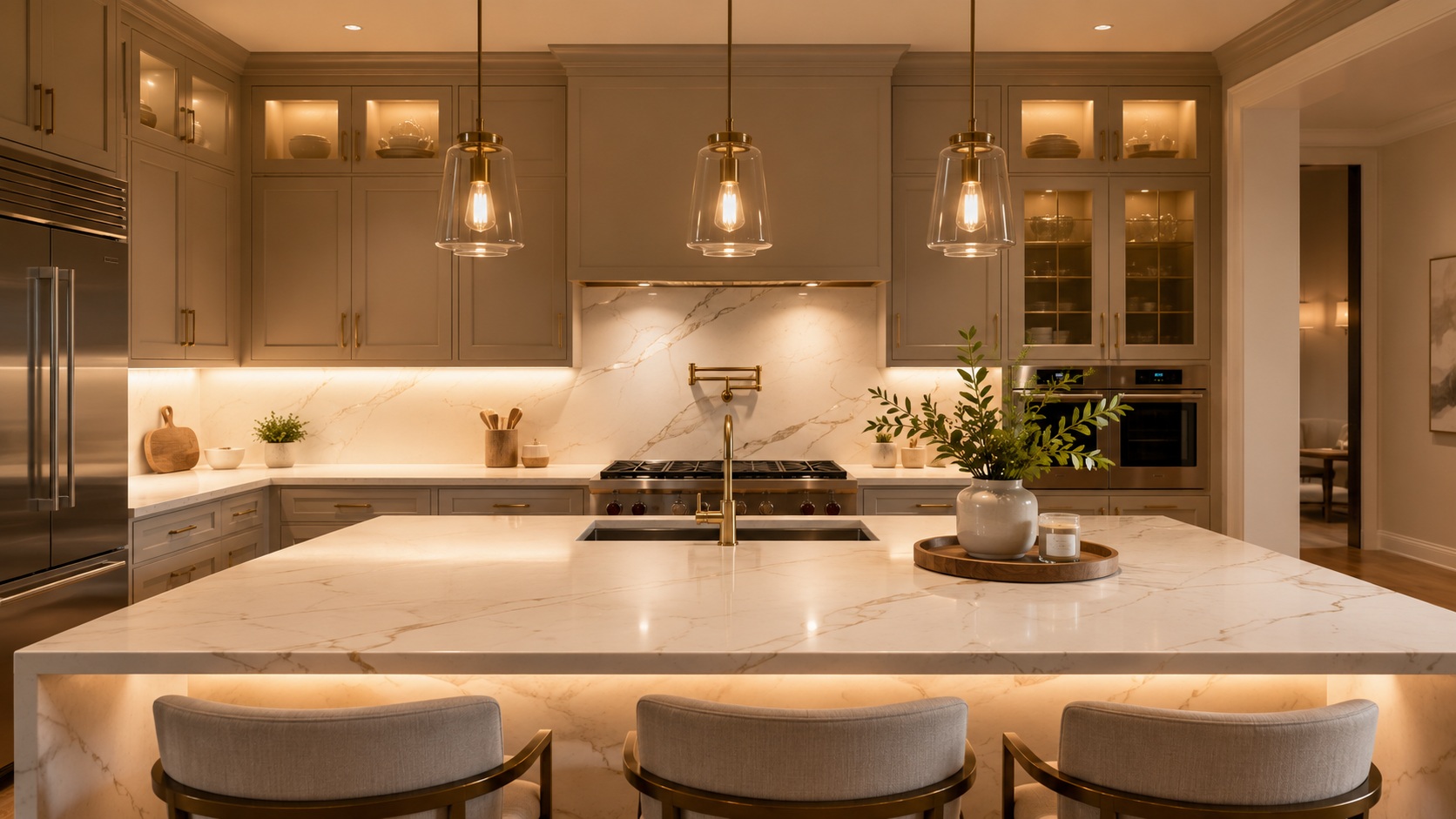
Why Quartz Looks Different In The Showroom And At Home
Many homeowners choose a quartz sample in one environment but view the finished countertop in another. This is one of the most common reasons the final installed surface may feel slightly different from expectation.
A showroom may have bright, controlled lighting. Your home may have smaller windows, warmer ceiling lights or darker cabinetry. Even if the quartz material is correct, the surrounding environment can shift its appearance.
This does not mean the quartz has changed. It means the viewing condition has changed.
Important differences include:
- Showroom lighting may be brighter than home lighting.
- Home kitchens may have mixed warm and cool light sources.
- Cabinet colours may reflect onto the countertop.
- Natural daylight changes throughout the day.
- Glossy finishes may reflect light more strongly.
- Matte or subtle patterns may look different under soft lighting.
Before confirming a quartz countertop, it is helpful to view the sample vertically and horizontally. A countertop is usually seen from above and at an angle, not only straight-on like a wall tile. This small step gives a more realistic impression.
The Role Of Natural Daylight In Malaysian Kitchens
Natural daylight can make quartz countertops look fresh, open and more dimensional. However, daylight is not constant. It changes based on time, weather and window direction.
Morning light may feel softer. Afternoon light may be stronger. Cloudy weather can make colours appear flatter. Direct sunlight can increase glare, especially on lighter or more reflective surfaces.
In Malaysia, many homes also have kitchen layouts where daylight enters from a yard, balcony, window or sliding door. If the countertop is close to a natural light source, the quartz colour may appear brighter during the day and deeper at night.
Direct Daylight Versus Diffused Daylight
Direct daylight hits the surface strongly. It can make light quartz look very bright and may highlight reflections.
Diffused daylight is softer. It gives a more even view of colour and pattern. This is often easier for assessing the overall tone of the countertop.
If your kitchen receives strong sunlight, consider how the countertop will look during peak daylight hours. Quartz Stone is suitable for many Malaysian kitchens, but very high direct heat should still be avoided. For daily use, always use trivets for very hot cookware and avoid treating any stone surface as indestructible.
Under Cabinet Lighting And Countertop Shadows
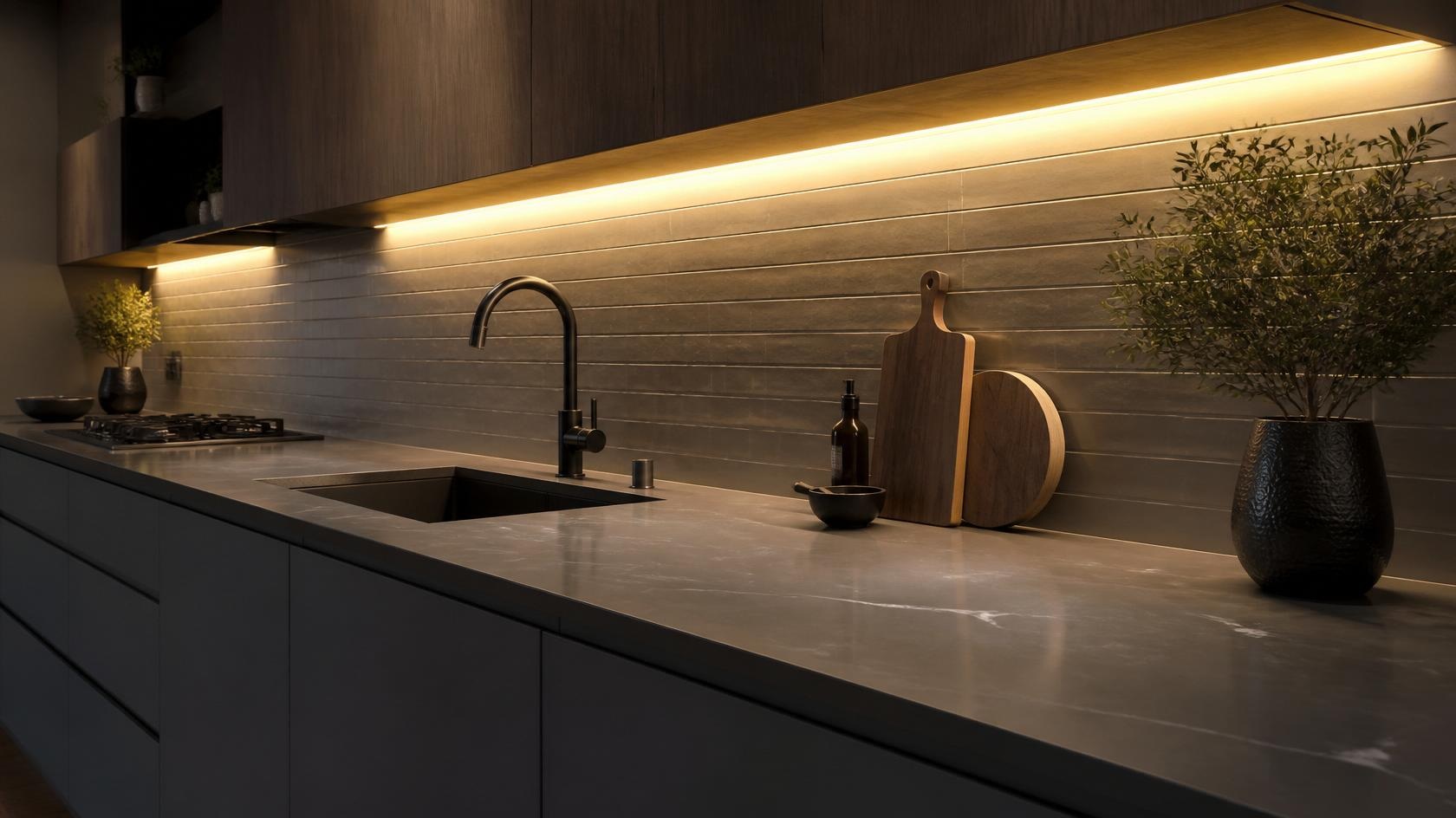
Under cabinet lighting is one of the most practical lighting choices for kitchen countertops. It improves visibility during food preparation and reduces shadows caused by wall cabinets.
Without under cabinet lighting, ceiling lights may be blocked by upper cabinets or by the person standing at the counter. This can create dark zones exactly where you need task lighting.
Under cabinet lighting helps by:
- Brightening the working surface
- Making veining and patterns easier to see
- Reducing shadows from wall cabinets
- Improving visibility near the backsplash
- Creating a cleaner evening kitchen appearance
However, under cabinet lights should be planned carefully. If the light is too close to the backsplash, the back area may look bright while the front edge remains darker. If the light is too harsh, it may create glare on polished quartz.
A balanced placement usually gives a more even result across the countertop depth.
Gloss, Reflection And Surface Finish
Quartz Stone is available in a wide range of colours and designs. Depending on the product selection, the surface appearance may look more reflective, more muted or more textured.
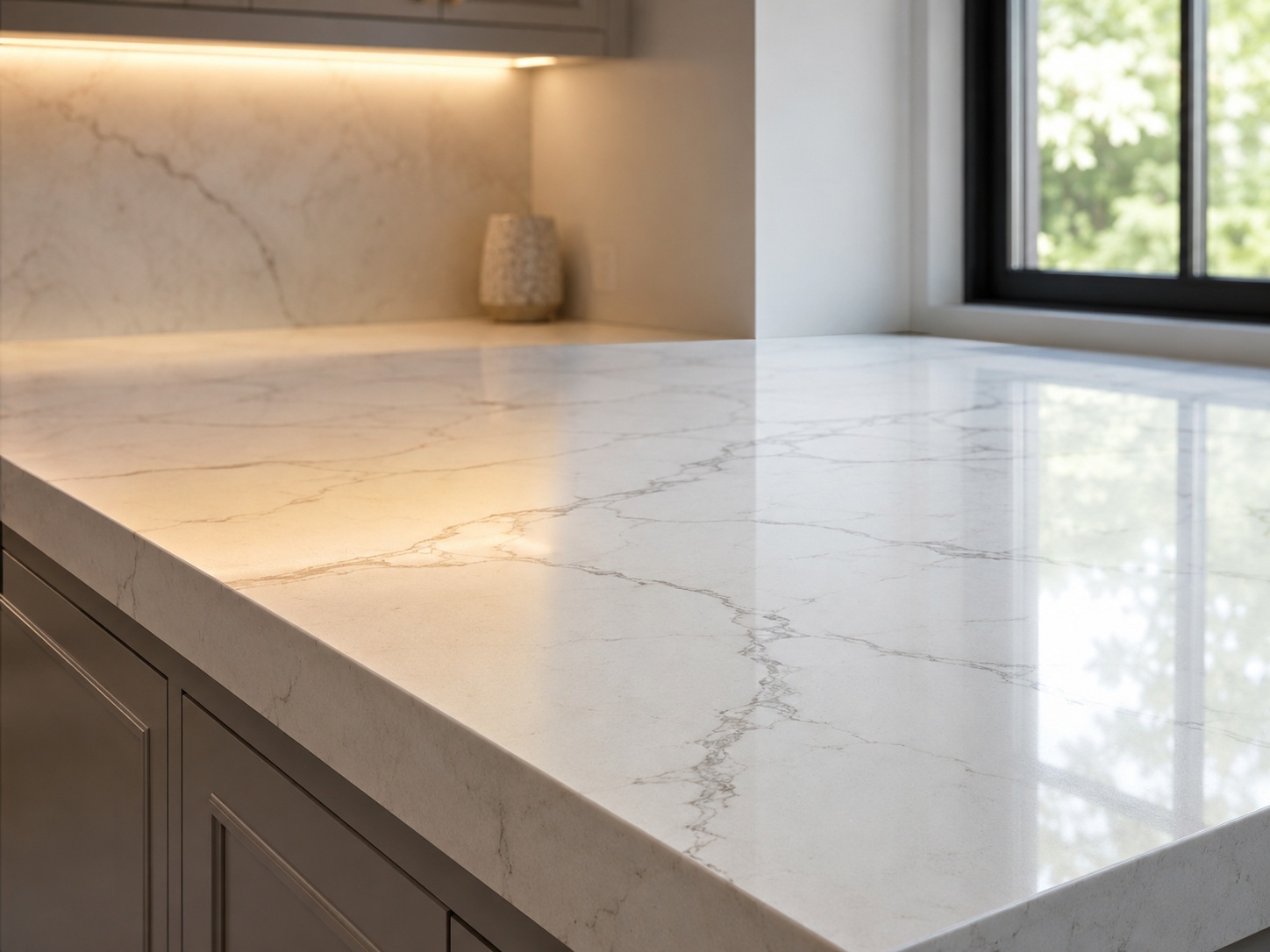
Lighting interacts strongly with surface finish. A polished surface may reflect ceiling lights, windows and bright cabinet surfaces. This can make the kitchen feel brighter, but it may also show glare more clearly.
A less reflective look may feel softer and calmer. However, subtle patterns may become less visible if the lighting is too dim or too diffused.
What To Check Before Choosing A Finish
When reviewing a quartz sample, check it under different angles. Do not only look at it flat on a table under one ceiling light.
Look for:
- Whether the surface reflects light strongly
- Whether the pattern is visible from normal standing distance
- Whether the colour still matches cabinets under evening lighting
- Whether the countertop looks too bright near windows
- Whether the veining becomes too strong under directional light
This is especially useful for kitchen islands, because islands are often viewed from multiple sides and may sit directly under pendant lights.
How Lighting Affects Quartz Veining And Patterns
Veining, speckles and decorative movement can appear stronger or softer depending on the light direction.
Directional lighting, such as spotlights or pendant lights, can make patterns more noticeable. This may be desirable if you want the quartz countertop to become a visual feature.
Diffused lighting spreads light more evenly. It can make the overall surface look calmer and reduce strong contrast.
For homeowners choosing marble-look quartz, lighting is particularly important. Some veining may appear soft in daylight but more dramatic at night under downlights. If the kitchen design already has strong cabinet colours, backsplash patterns or feature lighting, a heavily patterned countertop may need more careful coordination.
For a more timeless kitchen, many homeowners prefer a balanced approach: enough lighting to show the quartz design clearly, but not so much contrast that the surface becomes visually busy.
Cabinet Colours Can Change The Look Of Quartz
Lighting is not the only factor. Cabinet colours also affect how quartz is perceived.
White cabinets can make a quartz countertop look brighter and cleaner. Dark cabinets can make the same quartz appear more dramatic. Timber cabinets can warm up the surface. Grey cabinets can bring out cooler undertones.
This is why countertop selection should not be done in isolation. A quartz sample should be viewed together with cabinet laminates, backsplash samples and flooring samples where possible.
Common Pairing Considerations
For white quartz, check whether your lighting makes it look clean white, creamy white or slightly grey.
For grey quartz, check whether it becomes too cool under cool LED lighting.
For beige or warm-toned quartz, check whether warm lighting makes the surface too yellow.
For dark quartz, check whether the lighting is sufficient to show the pattern and maintain good working visibility.
For heavily veined quartz, check whether the pattern works well with cabinet grain and backsplash design.
This practical checking process is useful for both homeowners and designers because it reduces mismatch after installation.
Pendant Lights Over Quartz Kitchen Islands
Kitchen islands often become the centrepiece of a modern Malaysian kitchen. Pendant lights can improve the appearance of a quartz island, but they must be chosen carefully.
Pendant lighting affects:
- The brightness of the island surface
- The strength of reflections
- The visibility of veins and patterns
- The mood of the dining or gathering area
- The balance between function and ambience
If pendant lights are too low or too concentrated, they may create bright spots on the countertop. If they are too dim, the island may look attractive from a distance but less practical for food preparation.
For quartz islands with waterfall edges, lighting can also affect how the edge detail is seen. A waterfall edge may look more premium when light falls evenly across the top and side. Harsh shadows may hide the joint line or make the side panel look visually heavier than intended.
Colour Rendering And Why It Matters
Colour rendering describes how accurately a light source shows the colours of objects compared with a reference light source. In practical kitchen terms, better colour rendering helps the countertop, cabinets, food and finishes look more natural.
This matters because two LED lights with the same colour temperature can still show colours differently. One may make the quartz look clean and balanced, while another may make it look slightly dull or uneven.
For homeowners choosing quartz based on subtle undertones, colour rendering is important. A warm white quartz, cool white quartz and grey-veined quartz can look quite different depending on the quality of the light source.
Interior designers often pay attention to this because material selection depends on accurate colour judgement. Homeowners can apply the same principle by testing samples under their actual lighting or under lighting close to the final kitchen plan.
Practical Lighting Tips Before Choosing Quartz
Before finalising your quartz kitchen countertop, use a simple evaluation process.
First, bring the quartz sample near your actual cabinet material. View both together under natural daylight and artificial lighting.
Second, check the sample in the morning, afternoon and evening if possible. This helps you see how the surface changes throughout the day.
Third, place the sample horizontally. Countertops are viewed flat, so this gives a more realistic impression than holding the sample upright.
Fourth, test it under warm and neutral light if your kitchen lighting has not been finalised. This helps you decide whether the quartz colour remains suitable.
Fifth, look at the surface from different angles. This is especially important for polished quartz, veined quartz and island countertops.
Sixth, consider the lighting layout before installation. Under cabinet lights, ceiling lights and pendant lights should support the countertop design, not fight against it.
Quartz Countertop Lighting For Small Kitchens
Small kitchens need careful lighting because limited space can make shadows more noticeable. A darker countertop may look elegant, but it may also need stronger task lighting to remain practical.
For compact Malaysian kitchens, light quartz colours can help the space feel more open. However, the final result still depends on the cabinet colour and lighting temperature.
Useful considerations include:
- Use sufficient task lighting at food preparation areas.
- Avoid relying only on one central ceiling light.
- Check whether upper cabinets cast shadows.
- Choose quartz colours that remain clear under evening lighting.
- Avoid overly reflective lighting if glare becomes uncomfortable.
A small kitchen does not need complicated lighting. It needs consistent, practical lighting that allows the countertop to look good and function well.
Quartz Countertop Lighting For Open Kitchens
Open kitchens are often connected to dining and living areas. In this layout, lighting must balance task performance and ambience.
A quartz countertop may be used for cooking, serving, dining, hosting and casual work. Because of this, one lighting mode may not suit every situation.
Layered lighting works well in many open kitchens. Ceiling lights provide general brightness. Under cabinet lights support preparation work. Pendant lights create focus over an island or dining counter. Natural daylight adds freshness during the day.
The countertop colour should be assessed under all these conditions. A surface that looks perfect under daylight should also look comfortable at night when the kitchen becomes part of the living space.
Maintenance Visibility And Daily Use
Lighting also affects how easily homeowners see spills, crumbs, water marks and surface dust. Quartz Stone is generally easy to maintain for day-to-day use, but visibility still depends on colour, pattern and lighting.
Light quartz may show dark crumbs more clearly. Dark quartz may show light dust or water marks more clearly. Patterned quartz may visually hide small marks better than a plain surface, depending on the design.
For daily care, use a soft cloth, mild detergent and warm water. Clean spills promptly. Use chopping boards during food preparation and trivets for very hot cookware. These habits help keep the quartz countertop suitable for everyday kitchen use under normal household conditions.
Common Mistakes To Avoid
One common mistake is choosing quartz based only on a small sample under showroom lighting. Samples are useful, but they should be checked against the actual kitchen environment.
Another mistake is mixing too many light temperatures in one kitchen. For example, very warm pendant lights with very cool ceiling lights may make the countertop colour look inconsistent.
A third mistake is using decorative lighting without enough task lighting. A kitchen must still support cooking, cleaning and preparation.
A fourth mistake is ignoring reflections. Bright windows, glossy cabinets and polished quartz can all reflect light. This may be attractive, but it should be planned rather than discovered after installation.
A final mistake is treating lighting as an afterthought. Countertop, cabinet and lighting decisions should work together from the beginning of the renovation plan.
Conclusion
Quartz Countertop Lighting can change how your countertop colour, veining, finish and overall kitchen mood appear in real life. The effect is not just decorative. It influences material selection, daily usability, cleaning visibility and long-term satisfaction with the kitchen design.
For the best result, view quartz samples under natural daylight, evening lighting and the planned kitchen light temperature. Check the sample beside cabinet, backsplash and flooring materials. Pay attention to under cabinet lighting, pendant placement, glare and shadow control.
Quartz Stone remains a practical and popular choice for many Malaysian kitchens because it offers consistent colour and pattern, good scratch resistance under normal household use, good stain resistance under normal household use and easy day-to-day maintenance. With the right lighting plan, the countertop can look closer to your intended design in both daytime and night-time conditions.
Need help choosing the right quartz countertop for your kitchen lighting and cabinet design? SolidTop Sdn Bhdsolidtop.com.my provides countertop design, material selection, custom fabrication and professional installation for residential and commercial spaces. Feel free to speak with the team for practical guidance based on your project needs.
Why does my quartz countertop look different under different lights?
Quartz can look different because each light source has its own colour temperature, brightness and colour rendering quality. Cabinet colours, flooring, backsplash and natural daylight also affect how the surface appears.
What lighting is suitable for a quartz kitchen countertop?
A balanced lighting plan is usually best. General ceiling lighting, under cabinet task lighting and suitable island lighting can help the quartz countertop look clear and practical for daily use.
Does warm lighting make white quartz look yellow?
Warm lighting may make some white quartz surfaces appear creamier or slightly warmer. This is why it is useful to test the quartz sample under the actual lighting planned for your kitchen.
Is under cabinet lighting important for quartz countertops?
Under cabinet lighting is useful because it reduces shadows on the worktop and improves visibility during food preparation. It can also help show quartz patterns more clearly near the backsplash area.
Should I choose quartz colour before or after planning lighting?
Ideally, quartz colour, cabinet colour and lighting should be planned together. Viewing the quartz sample under your expected lighting helps reduce surprises after installation.
Add a Comment