
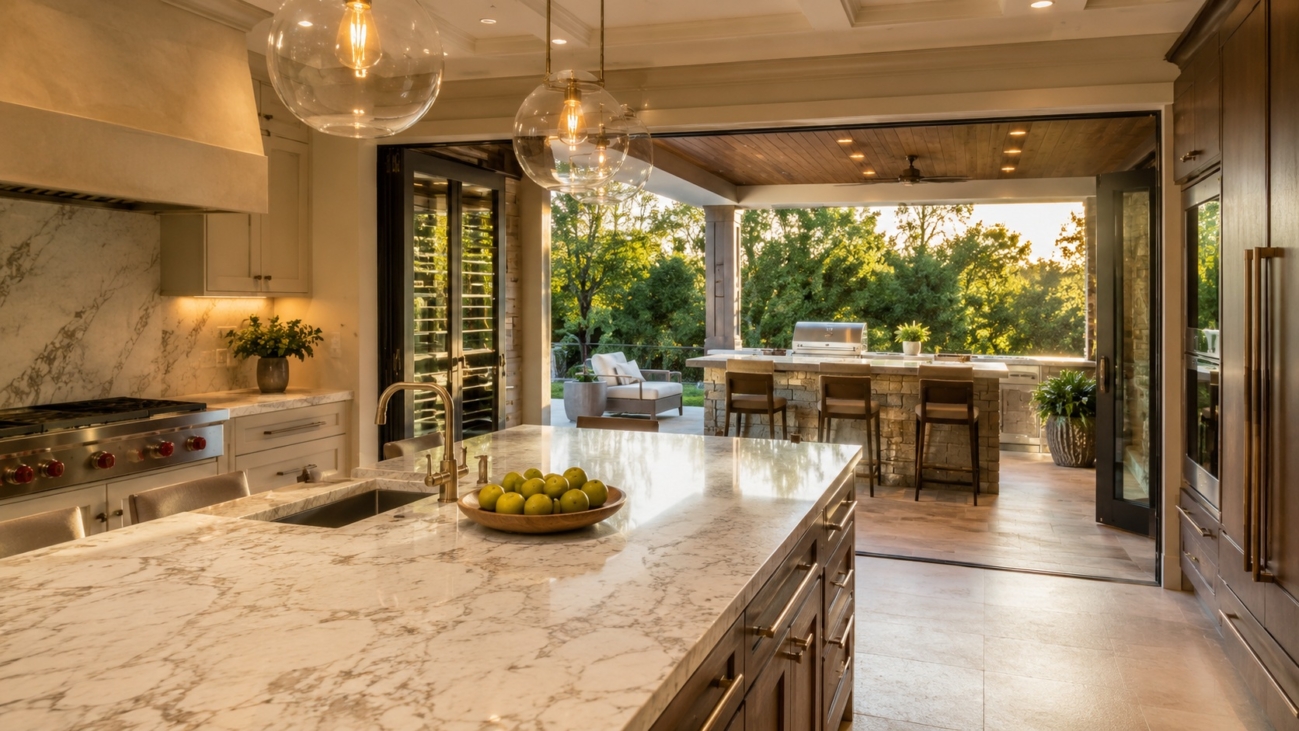
Choosing between Indoor vs Outdoor Countertops is not just about colour or design. In Malaysia, countertops need to suit how the space is used, how much sunlight or moisture it receives, and how often the surface is exposed to cooking, cleaning, rain, heat and daily family activity.
A countertop that performs well in a dry kitchen may not always be the most suitable choice for an outdoor barbecue area. Likewise, an outdoor-friendly stone may feel too heavy or textured for an elegant indoor island.
This guide will help homeowners, interior designers, contractors and property owners understand how to choose the right stone surface for every space with better confidence.
Indoor vs Outdoor Countertops: Why Location Matters
Indoor and outdoor countertops face very different conditions.
Indoor countertops are usually protected from direct sunlight and rain. They are mainly exposed to food preparation, cooking spills, water, oil, detergents and daily cleaning.
Outdoor countertops, however, may face stronger environmental exposure, including:
- UV sunlight
- Rain and humidity
- Heat from outdoor cooking
- Dust and leaves
- Airborne dirt
- Temperature changes
- Possible algae or moss in wet areas
Because of this, material selection should begin with the location, not only the appearance.
For example, a beautiful polished surface may look premium indoors but become harder to maintain outdoors if it is constantly exposed to weather. A more practical outdoor countertop may need better UV stability, lower water absorption and a finish that remains comfortable and safe under real outdoor use.
Understanding Indoor Countertop Needs
Indoor countertops are commonly used for kitchens, kitchen islands, dining tables, vanity tops, reception counters and commercial worktops.
For Malaysian homes, indoor countertops often need to support a mix of dry and wet kitchen activities.
Kitchen Countertops
Kitchen countertops need to handle food preparation, cooking, washing and cleaning. A suitable indoor kitchen surface should be:
- Easy to clean
- Stain-resistant under normal household use
- Durable for daily cooking routines
- Comfortable for food preparation
- Suitable for the overall cabinet and interior design
Quartz Stone is a popular indoor choice because it offers consistent colours, modern patterns and easy day-to-day maintenance. For Malaysian market applications, common quartz countertop thicknesses are 15mm and 20mm.
Quartz is suitable for many indoor kitchens, especially when homeowners want a clean, modern and low-maintenance surface. However, very high direct heat should still be avoided. Use trivets for hot cookware and chopping boards for food preparation.
Kitchen Islands and Dining Spaces
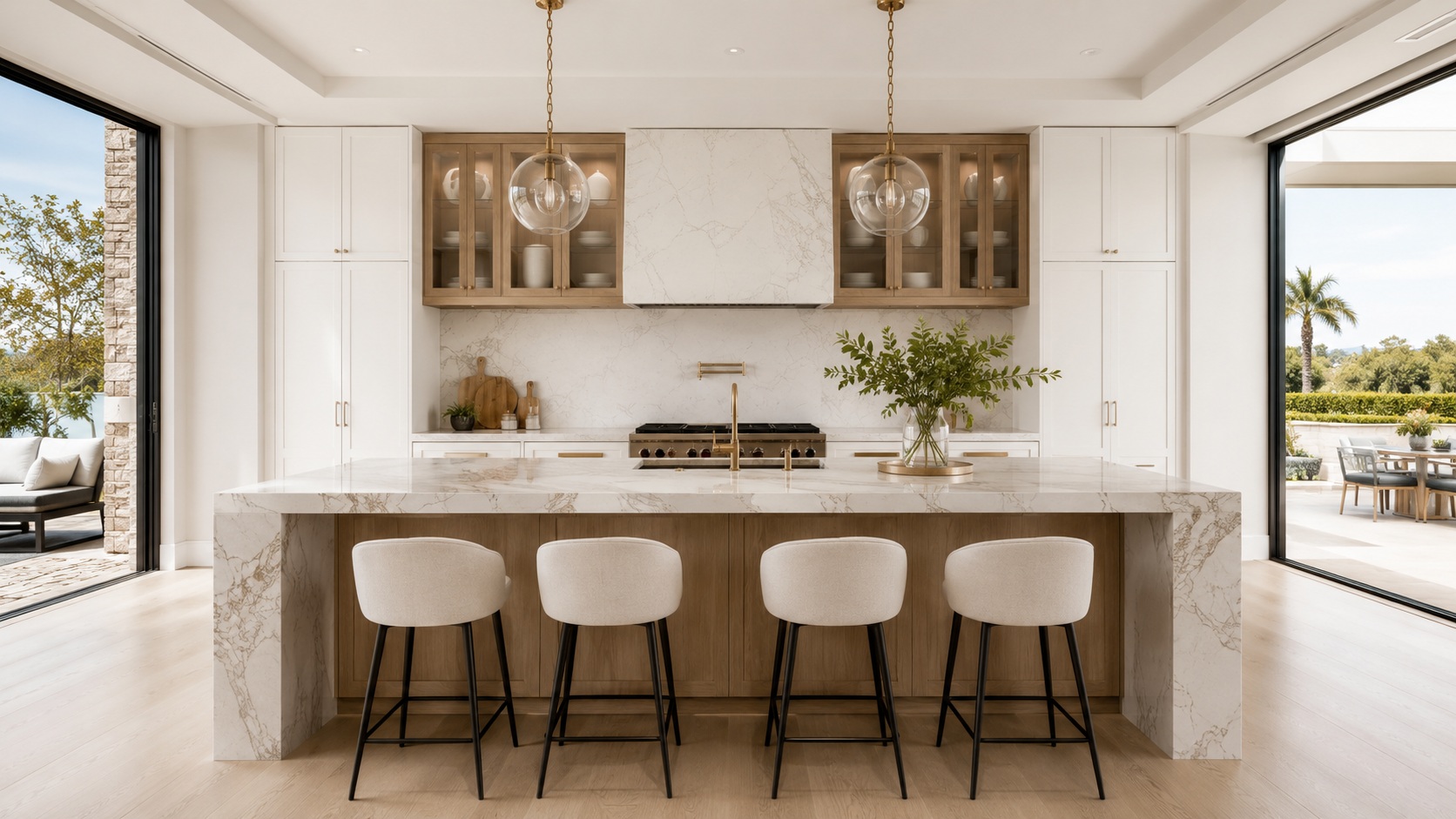
Kitchen islands are often used as both a worktop and a social area. This means the countertop must look good while remaining practical.
For indoor islands, homeowners may consider:
- Quartz Stone for consistent modern designs
- Marble Stone for an elegant natural look
- Granite Stone for natural character and durability
- Sintered Stone for a refined contemporary appearance
The right choice depends on lifestyle. A family that cooks daily may prefer easier maintenance. A homeowner who wants a luxury feature island may focus more on veining, colour depth and visual impact.
Bathroom Vanity Tops
Indoor vanity tops face water, soap, skincare products and humidity. The surface should be easy to wipe and properly installed to reduce moisture-related issues.
Quartz Stone, sintered stone and solid surface are commonly considered for vanity applications because they can provide a clean and modern look. Natural stones such as marble and granite can also be used, but they require proper care and realistic expectations, especially around staining and etching risk.
Understanding Outdoor Countertop Needs
Outdoor countertops are different because they are part of an open or semi-open environment.
In Malaysia, outdoor spaces may include:
- Patio counters
- Outdoor kitchen counters
- Barbecue counters
- Balcony counters
- Poolside counters
- Semi-outdoor wet kitchens
- Commercial outdoor service counters
Outdoor countertops need to be selected with greater care because sunlight, moisture and weather exposure can affect long-term appearance and performance.
UV and Sunlight Exposure
Outdoor countertops may receive direct or indirect sunlight for many hours. Some materials can change colour, fade or become less stable when exposed to UV over time.
This is one reason why not every indoor material should automatically be used outdoors. Before choosing a surface, it is important to check whether the material is suitable for exterior exposure.
Rain, Moisture and Humidity
Outdoor surfaces are more exposed to rainwater and moisture. In shaded, damp or poorly ventilated areas, dirt buildup, water marks or algae may also become a maintenance concern.
A good outdoor countertop should be paired with proper installation details, including suitable slope, drainage consideration, correct support and careful joint planning.
Heat from Outdoor Cooking
Outdoor cooking areas may involve grills, portable burners or barbecue equipment. Even when a stone surface has good heat resistance, it is still wise to avoid placing extremely hot cookware directly on the countertop unless the material supplier confirms it is suitable for that use.
For long-term care, using heat pads or trivets remains a practical habit.
Best Stone Options for Indoor Countertops
There is no single “perfect” countertop material for every indoor space. The best choice depends on usage, maintenance expectations and design preference.
Quartz Stone
Quartz Stone is an engineered stone surface made by combining natural quartz with resins, pigments and selected materials under high pressure.
It is suitable for:
- Kitchen countertops
- Kitchen islands
- Dry kitchens
- Wet kitchens
- Bathroom vanity tops
- Dining tables
- Reception counters
- Office worktops
Quartz is appreciated because it offers consistent colour, wide design choices and easy daily cleaning. Under normal household use, it provides good scratch and stain resistance.
However, it should not be described as heat-proof or indestructible. Homeowners should still use trivets, avoid harsh chemicals and clean spills promptly.
Granite Stone
Granite Stone is a natural stone with unique patterns and natural strength. It is often suitable for homeowners who appreciate natural variation and long-term durability.
For kitchen countertop use, granite is commonly considered in 18mm and above where relevant. It can be a strong option for both indoor and selected outdoor applications, depending on the stone type, finish, sealing and installation.
Granite may require sealing and proper maintenance, especially in areas exposed to food stains, oil or moisture.
Marble Stone
Marble Stone gives a premium, elegant appearance with natural veining. It is often chosen for feature counters, vanity tops, dining areas and luxury interiors.
However, marble is more sensitive to acidic substances and may require more care compared with some engineered surfaces. It is beautiful, but it is better suited for customers who appreciate natural stone character and are comfortable with proper maintenance.
Solid Surface
Solid Surface is commonly used where seamless-looking designs and smooth forms are preferred. It can be suitable for selected indoor applications, especially vanity tops and commercial counters.
It is practical for certain design needs, but material suitability should be checked based on usage, heat exposure and project requirements.
Best Stone Options for Outdoor Countertops
Outdoor countertop selection should prioritise weather suitability first, followed by design.
Sintered Stone and Ultra-Compact Surfaces
Sintered Stone or ultra-compact surfaces are often considered for outdoor or semi-outdoor use because many products are designed with strong resistance to moisture, UV exposure, heat and surface wear.
They can be suitable for:
- Outdoor kitchens
- Patio counters
- Balcony counters
- Barbecue preparation areas
- Commercial outdoor counters
The exact suitability depends on the specific product brand, slab specification and installation method. Always confirm outdoor application suitability before finalising the material.
Granite Stone
Granite can be a practical outdoor option when properly selected and installed. As a natural stone, it can handle many demanding applications, but not all granite varieties perform the same way.
For outdoor use, the project should consider:
- Stone density and porosity
- Surface finish
- Sealing requirements
- Sun and rain exposure
- Support structure
- Cleaning routine
Granite is often appreciated for its natural appearance and durability, but proper care is still needed.
Porcelain and Dekton-Type Surfaces
Porcelain and Dekton-type ultra-compact surfaces are commonly considered for outdoor countertop applications because selected products are designed for demanding environments.
They can offer a modern look, large-format appearance and practical performance for open or semi-open spaces. However, fabrication and installation should be handled professionally because large-format surfaces require proper tools, support and handling.
Materials to Be Careful With Outdoors
Some materials that work well indoors may not be suitable for full outdoor exposure.
For example, standard indoor quartz is generally best kept indoors unless the product is specifically designed and approved for outdoor use. This is because resins in engineered quartz may be affected by prolonged UV exposure.
Marble can be used outdoors in selected design contexts, but it requires more careful consideration due to weathering, staining and surface changes over time.
Solid Surface may also have limitations outdoors depending on the product type and exposure level.
The safest approach is to ask the supplier or countertop specialist whether the specific product is recommended for outdoor use.
Practical Comparison: Indoor vs Outdoor Countertops
For Indoor Spaces
Choose materials based on:
- Cooking habits
- Cleaning expectations
- Cabinet design
- Colour consistency
- Family use
- Desired appearance
- Long-term maintenance comfort
Quartz Stone is often a strong indoor choice for homeowners who want modern design and easy daily care. Marble suits elegant spaces where visual character matters. Granite suits those who appreciate natural stone strength and uniqueness.
For Outdoor Spaces
Choose materials based on:
- UV exposure
- Rain and moisture
- Ventilation
- Heat source
- Cleaning access
- Slip and safety considerations
- Installation support
Sintered Stone, selected ultra-compact surfaces and suitable granite options are often worth exploring for outdoor areas.
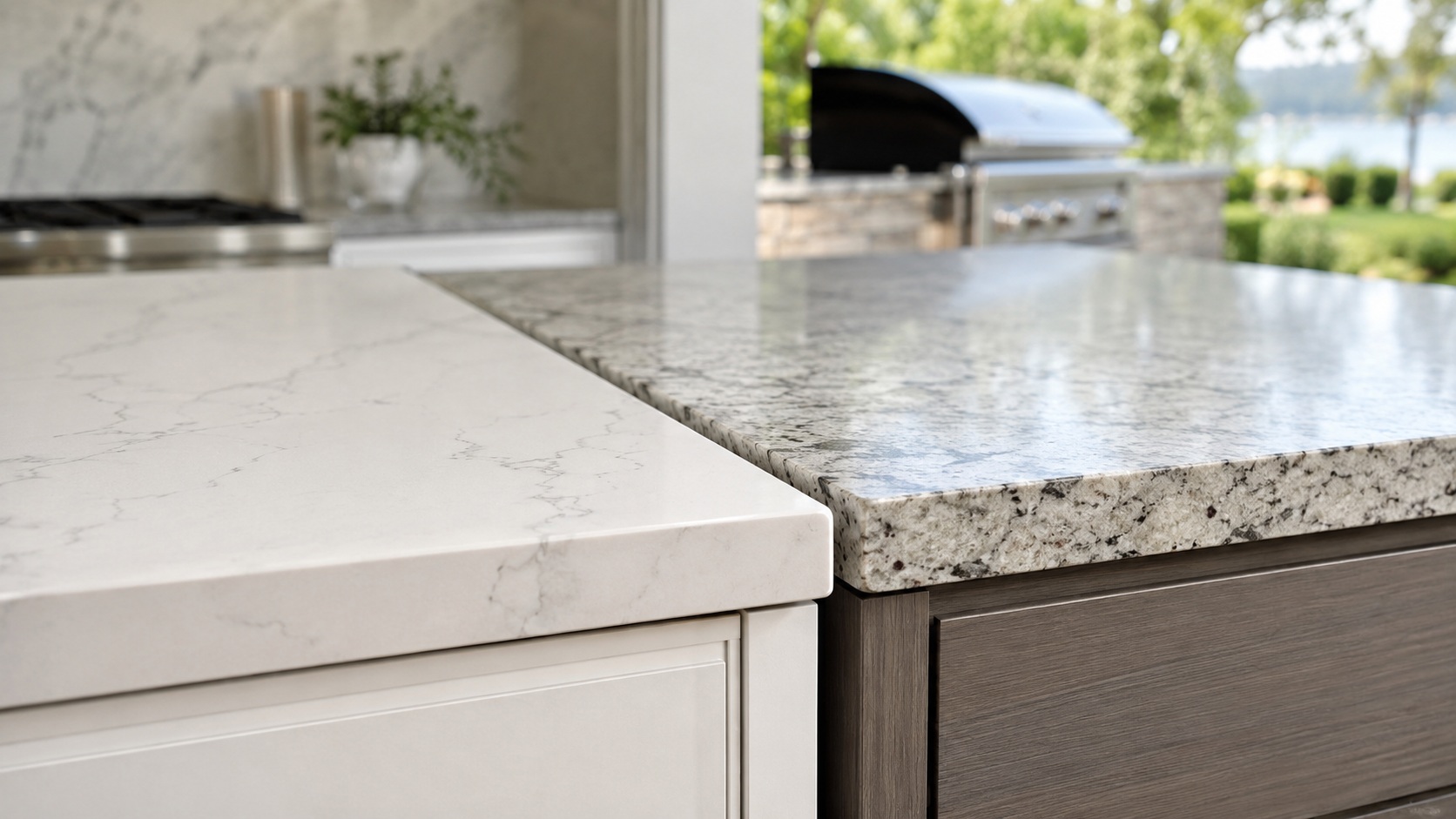
Maintenance Tips for Indoor and Outdoor Countertops
Good maintenance helps any countertop perform better over time.
For indoor countertops:
- Wipe spills promptly
- Use mild detergent and warm water
- Avoid harsh chemicals
- Use chopping boards
- Use trivets for hot cookware
- Dry wet areas after cleaning
For outdoor countertops:
- Rinse dust and dirt regularly
- Clean with suitable mild cleaners
- Avoid leaving leaves or organic debris on the surface
- Check sealant or joints periodically where relevant
- Keep drainage areas clear
- Follow the specific care instructions for the chosen material
The Natural Stone Institute also recommends neutral cleaners or mild liquid dishwashing detergent with warm water for general natural stone care.
Common Mistakes to Avoid
Choosing by Appearance Only
A countertop may look beautiful in a showroom but behave differently in a wet kitchen, balcony or outdoor cooking area. Always match the material to the space.
Assuming Indoor Materials Can Be Used Outdoors
This is one of the most common mistakes. Outdoor exposure changes the performance requirements. Always confirm whether the material is suitable for exterior use.
Ignoring Installation Details
Even a good material can underperform if support, joints, edge details or drainage are not properly planned. Professional fabrication and installation are important for long-term reliability.
Expecting Any Material to Be Maintenance-Free
Every countertop needs care. Some materials are easier to maintain, but no surface should be treated as completely maintenance-free.
Conclusion
Choosing Indoor vs Outdoor Countertops becomes much easier when you start with the environment first. Indoor spaces usually focus on cooking habits, design style and easy maintenance. Outdoor spaces need stronger attention to UV exposure, rain, moisture, heat and installation details.
For indoor kitchens, Quartz Stone is often a practical and modern choice under normal household use. For outdoor or semi-outdoor areas, suitable granite, sintered stone and selected ultra-compact surfaces are worth considering, depending on the project conditions.
The best countertop is not simply the most premium-looking option. It is the material that fits your space, lifestyle, maintenance expectations and long-term use. Need help choosing the right stone for your indoor or outdoor countertop? SolidTop Sdn Bhd provides professional countertop consultation, material selection, custom fabrication and installation for residential and commercial spaces in Klang Valley.
What is the main difference between indoor and outdoor countertops?
Indoor countertops are usually protected from sunlight and rain, while outdoor countertops must handle UV exposure, moisture, heat and weather changes. This means outdoor materials need stronger environmental suitability.
Can quartz countertops be used outdoors?
Standard indoor quartz is generally more suitable for indoor use unless the specific quartz product is designed and approved for outdoor application. Always confirm with the supplier before using quartz outdoors.
What stone is suitable for outdoor countertops in Malaysia?
Suitable options may include selected granite, sintered stone and ultra-compact surfaces, depending on exposure level, product specification and installation method.
Are outdoor countertops harder to maintain?
Outdoor countertops may need more frequent cleaning because they are exposed to dust, rain, leaves and humidity. Choosing the right material and planning proper drainage can make maintenance easier.
How do I choose between quartz, granite and sintered stone?
Quartz is often practical for indoor kitchens, granite offers natural character and durability, while sintered stone is commonly considered for demanding indoor or outdoor applications. The best choice depends on usage, design preference and location.
Add a Comment