
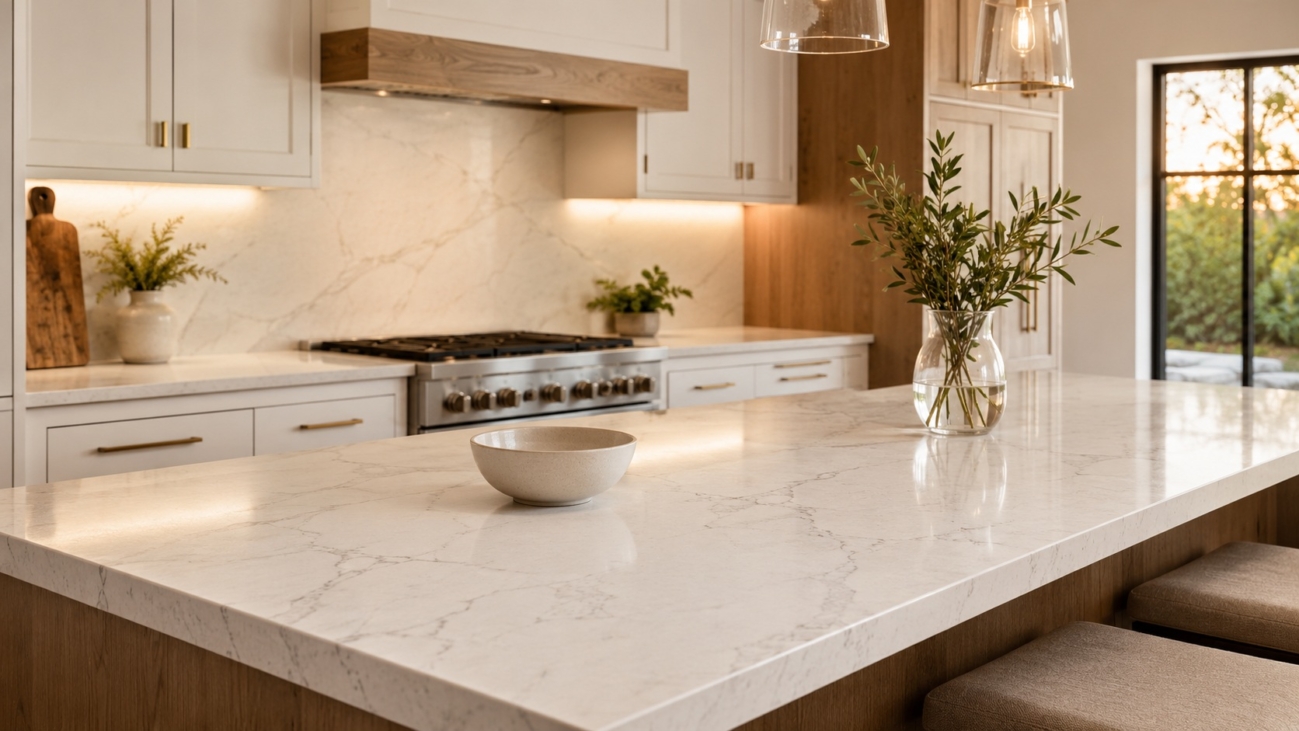
If you are searching for how to Repair Quartz Countertop damage, you are probably dealing with a chip, crack, stain mark, dull patch, or heat-related discolouration on your kitchen surface. Quartz Stone is a durable engineered surface and is suitable for many Malaysian kitchens, but like any countertop material, it is not indestructible.
The good news is that some types of quartz countertop damage can be repaired or improved. The more important question is: what kind of damage do you have, how serious is it, and whether repair will give a neat, long-lasting result.
This guide explains the practical details homeowners, interior designers, contractors, and property owners should know before deciding what to do next.
What Makes Quartz Countertops Durable?
Quartz Stone is an engineered stone surface made by combining natural quartz with resins, pigments, and other selected materials under high pressure. This gives quartz a consistent appearance, wide design variety, good hardness, and reliable day-to-day performance.
For Malaysian homes, quartz is often used for:
- Kitchen countertops
- Kitchen islands
- Bathroom vanity tops
- Dining table tops
- Reception counters
- Commercial worktops
Quartz Stone is popular because it is scratch-resistant and stain-resistant under normal household use. It is also easy to maintain with proper care.
However, quartz should not be described as scratch-proof, stain-proof, heat-proof, or maintenance-free. Heavy impact, sharp force, unsuitable chemicals, and direct high heat can still cause visible damage.
Can You Repair Quartz Countertop Damage?
Yes, you can repair quartz countertop damage in certain situations. Small chips, minor edge damage, light surface marks, and some localised imperfections may be repairable by a trained countertop specialist.
However, not every issue can be restored completely. Deep cracks, large broken sections, severe heat damage, or structural movement may require more detailed inspection. In some cases, replacement of the affected section may be more suitable than surface repair.
The repair outcome depends on several factors:
- Type of damage
- Depth and size of the affected area
- Location of the damage
- Quartz colour and pattern
- Edge profile
- Installation condition
- Whether the surface is still stable
For example, a small chip on a straight edge may be easier to improve than a long crack near a sink cut-out. A plain quartz colour may also be easier to colour-match than a dramatic veined design.
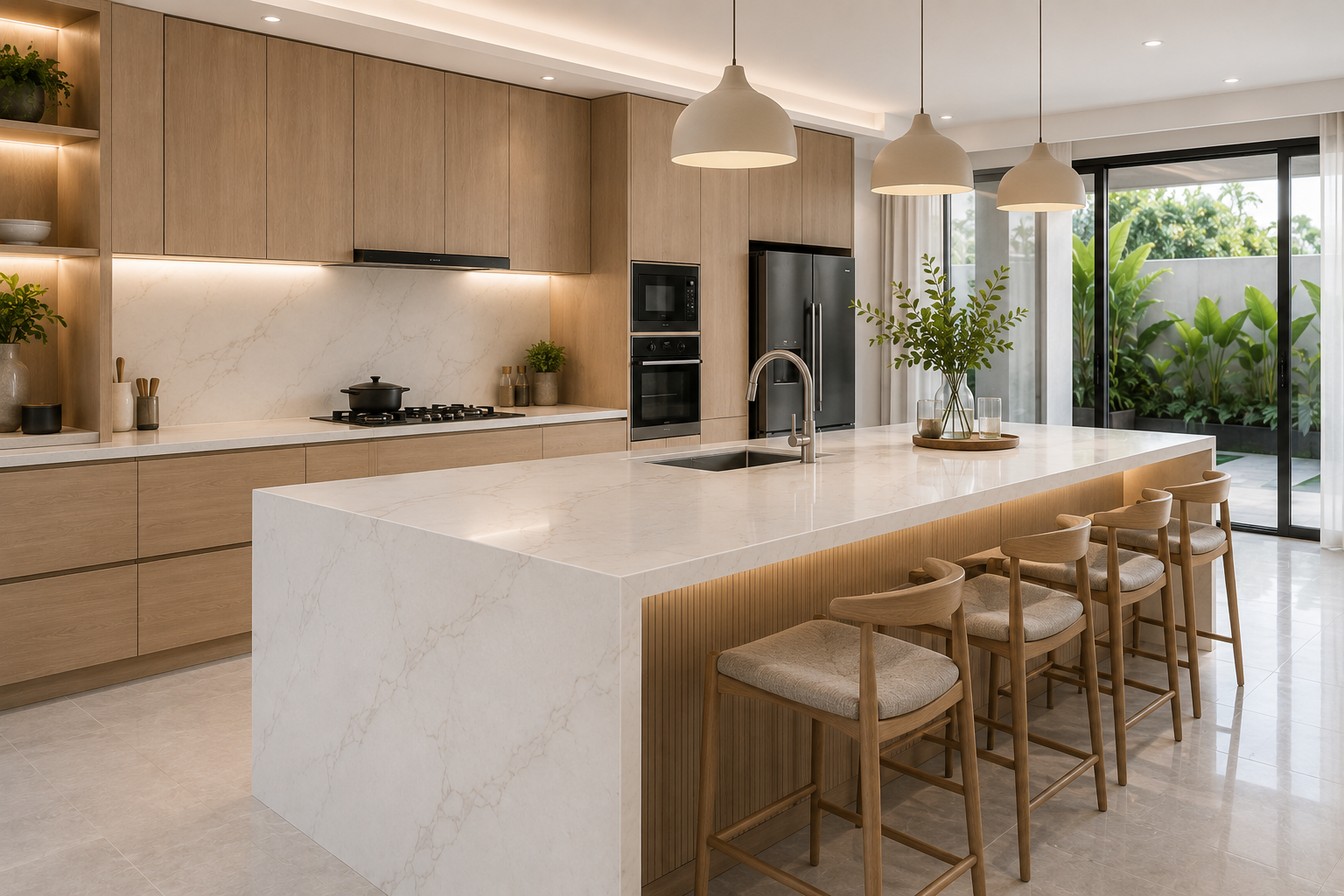
Common Types of Quartz Countertop Damage
1. Small Chips on Edges or Corners
Chips usually happen when a heavy item hits the countertop edge. This may occur near kitchen islands, sink areas, or corners where cookware and appliances are frequently moved.
Small chips are often repairable. A specialist may use colour-matched filler, resin, or polishing methods to reduce the visibility of the damaged area.
The repair may not make the countertop look brand new, especially under close inspection, but it can often make the surface neater and safer for everyday use.
2. Fine Surface Scratches
Quartz has good scratch resistance under normal household use, but it can still show marks if sharp objects are dragged across the surface. Fine scratches may appear more visible on darker colours or polished finishes.
Some light marks may be improved through professional assessment and surface treatment. However, deep scratches are more difficult because quartz is not usually refinished in the same way as some other surface materials.
To prevent future scratches, always use a chopping board instead of cutting directly on the countertop.
3. Cracks Around Cut-Outs
Cracks near sink cut-outs, hob openings, or joint areas should be taken seriously. These areas may experience stress from weight, installation pressure, movement, or thermal changes.
A crack may be cosmetic, but it may also suggest a deeper support or installation issue. Before repairing the visible crack, the underlying cause should be checked.
A proper inspection may look at:
- Cabinet support
- Joint placement
- Appliance opening
- Edge distance
- Substrate condition
- Movement or settling
This is where professional consultation matters. Repairing the surface without understanding the cause may lead to the same issue appearing again.
4. Heat Marks or Discolouration
Quartz is suitable for everyday kitchen use, but very high direct heat should be avoided. Hot pans, heated appliances, or sudden temperature changes may affect the resin component of engineered quartz.
Heat-related marks can be difficult to repair because the damage may not sit only on the surface. In some cases, the colour or gloss may change permanently.
For prevention, use trivets or heat pads for hot cookware, air fryers, slow cookers, electric pans, and other heat-generating items.
5. Stubborn Stains or Chemical Marks
Quartz offers good stain resistance under normal household use, especially when spills are cleaned promptly. However, strong chemicals, harsh cleaners, dyes, or prolonged contact with certain substances can leave marks.
Before attempting any aggressive cleaning, check whether the mark is a stain, residue, surface dullness, or chemical reaction. Using the wrong cleaner may worsen the damage.
For daily care, use a soft cloth, mild detergent, and warm water. Avoid abrasive pads and harsh chemicals unless they are confirmed suitable for engineered quartz.
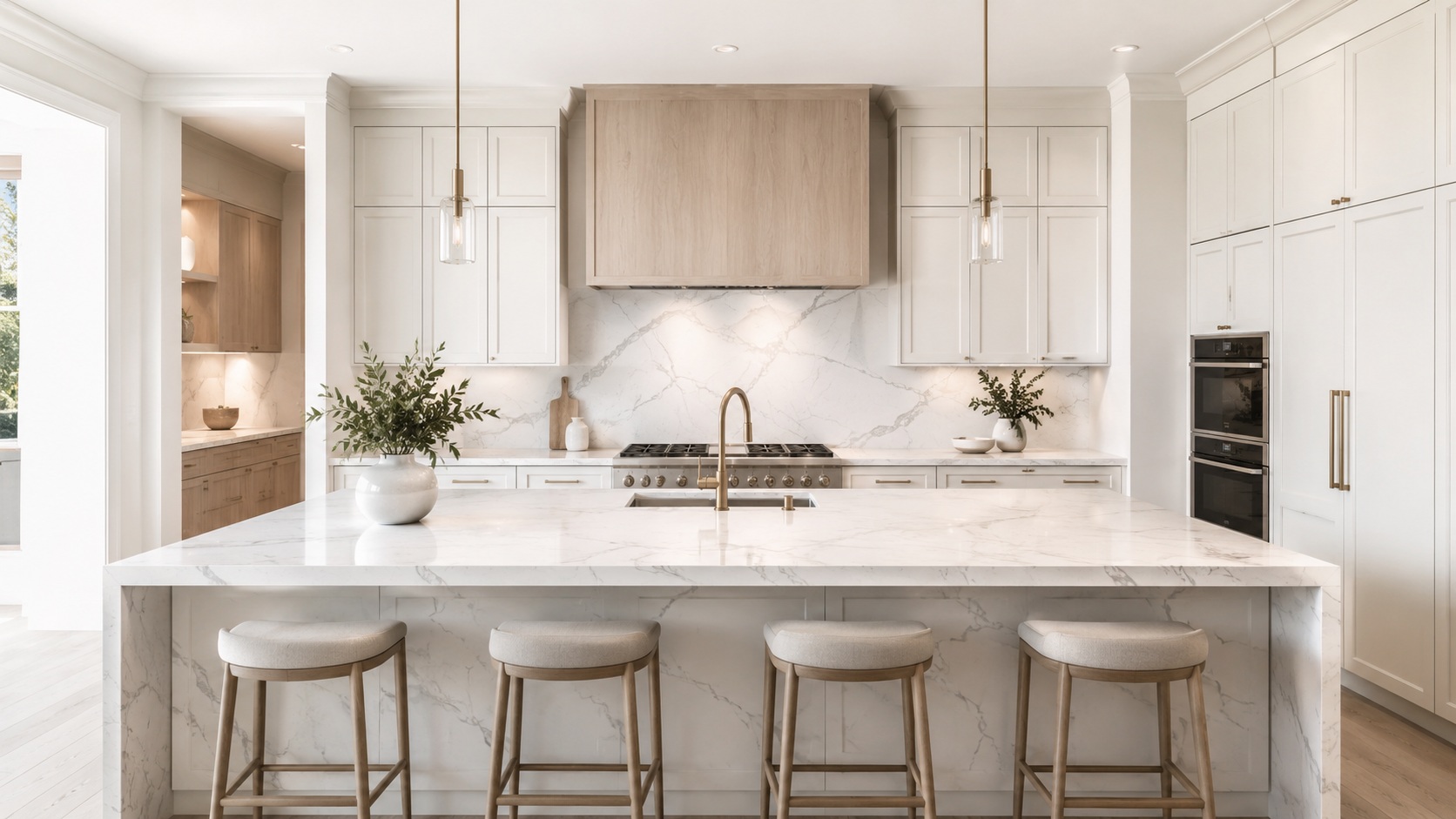
When Is Repair Usually Possible?
Quartz countertop repair is usually more practical when the damage is small, localised, and not affecting the slab structure.
Repair may be suitable for:
- Small edge chips
- Minor corner chips
- Light surface marks
- Small localised scratches
- Minor joint touch-ups
- Small filled imperfections
The goal of repair is usually to improve appearance, reduce rough edges, and make the area more usable. A good repair should blend as naturally as possible with the existing quartz surface.
However, homeowners should have realistic expectations. Because quartz has colour, pattern, resin, and mineral particles running through the material, a repaired area may still be slightly visible depending on lighting and viewing angle.
When Repair May Not Be Enough
Repair may not be the right solution when the countertop has more serious damage.
Replacement or more extensive work may be needed if there is:
- A long crack across the slab
- Severe heat discolouration
- Movement under the countertop
- Large broken pieces
- Multiple cracks near cut-outs
- Poor support below the slab
- Water or chemical damage affecting nearby fittings
In these cases, simply filling the visible mark may not solve the problem. A countertop specialist should inspect the installation, support structure, and damage pattern before recommending the next step.
For Malaysian kitchen renovation projects, this is especially important in wet kitchens where daily cooking, heat, moisture, and heavy cookware are common.
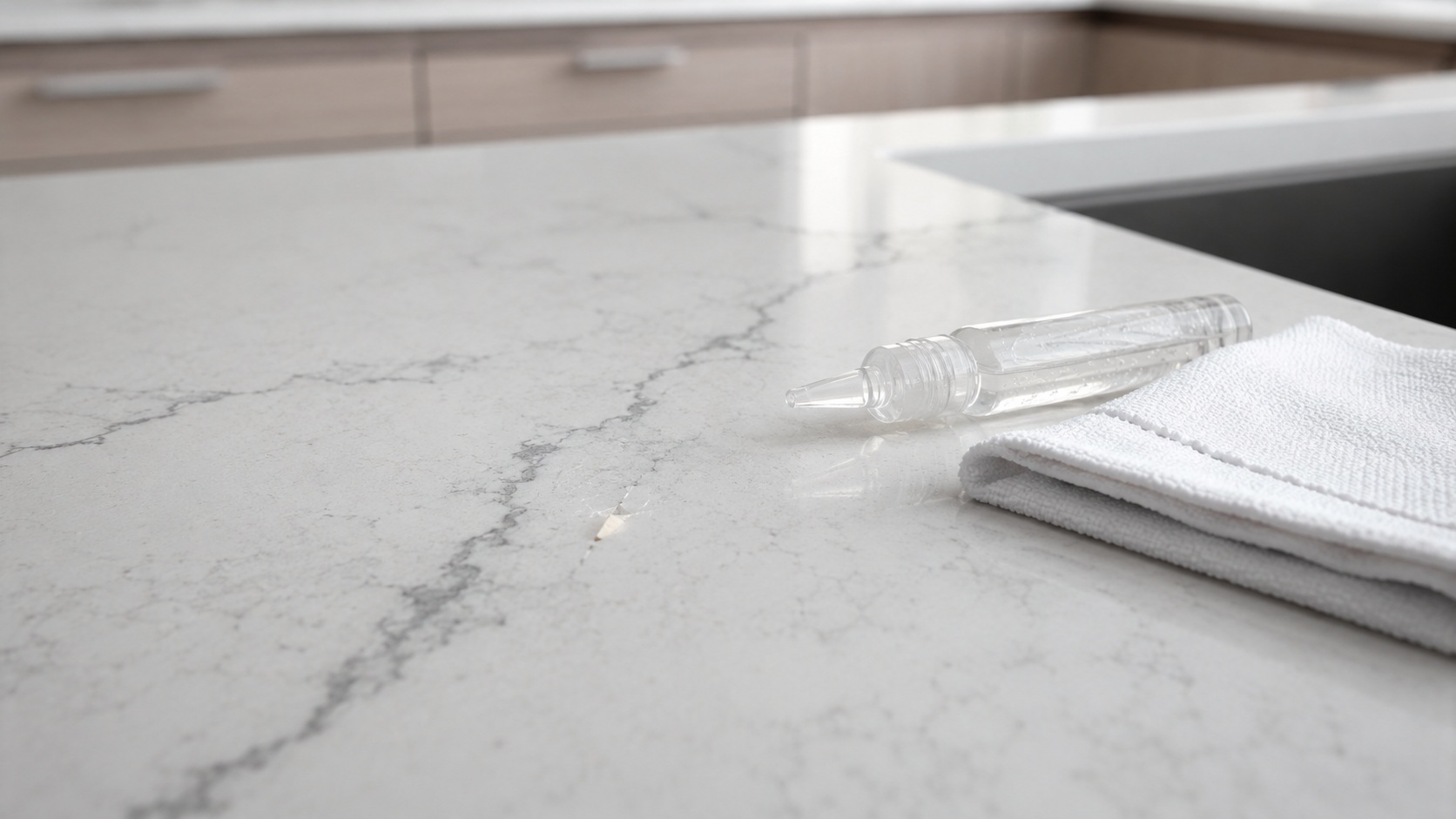
DIY Repair vs Professional Quartz Countertop Repair
DIY Repair
Some homeowners may consider DIY repair kits for small chips or marks. While this may seem convenient, quartz repair requires careful colour matching, surface preparation, levelling, curing, and finishing.
DIY repair may be risky if:
- The quartz has a visible pattern
- The chip is near a prominent edge
- The crack is close to a sink or hob
- The surface has a polished finish
- The damage may be structural
A poorly matched repair may become more obvious than the original chip.
Professional Repair
Professional repair is usually recommended when appearance and long-term performance matter. A specialist can assess whether the damage is cosmetic or structural, then recommend a suitable repair method.
Professional repair may involve:
- Cleaning and preparing the affected area
- Matching colour and tone as closely as possible
- Filling chips or gaps
- Levelling the repaired surface
- Refining the finish
- Advising on prevention and care
This approach is especially suitable for kitchen islands, premium kitchen countertops, reception counters, and visible areas where the repair quality matters.
How to Prevent Quartz Countertop Damage
Prevention is always better than repair. With proper care, quartz can remain attractive and practical for many years under normal household use.
Use Chopping Boards
Do not cut directly on the quartz surface. Even though quartz is hard, direct knife use can leave marks and may also dull your knives.
Use Trivets for Hot Items
Avoid placing hot pans, pots, baking trays, air fryers, or slow cookers directly on the countertop. Use trivets or heat pads to reduce the risk of heat marks and thermal stress.
Clean Spills Promptly
Wipe spills using a soft cloth, mild detergent, and warm water. This is especially helpful for coffee, tea, sauces, oils, and coloured liquids.
Avoid Harsh Chemicals
Strong chemicals and abrasive cleaners may affect the finish. Use gentle cleaning methods unless a product is clearly suitable for engineered quartz.
Protect Edges from Impact
Quartz edges can chip if hit by heavy cookware or appliances. Take extra care near corners, sink areas, and kitchen island overhangs.
Choosing the Right Quartz Thickness and Installation
For Quartz Stone countertops in the Malaysian market, common thicknesses are 15mm and 20mm. The right choice depends on the countertop design, support, application, edge detail, and overall kitchen layout.
Thickness alone does not determine performance. Proper fabrication, suitable cabinet support, accurate cut-outs, and professional installation are equally important.
This is why consultation is useful before fabrication begins. A well-planned countertop can reduce the risk of stress points, weak corners, awkward joints, and unnecessary future repair issues.
Why Professional Assessment Matters
A damaged quartz countertop should not be judged only by what is visible on the surface. A small crack may be harmless, or it may point to movement below the slab. A chip may be cosmetic, or it may be in a high-impact area that needs careful finishing.
SolidTop Sdn Bhdsolidtop.com.my provides countertop design, material supply, custom fabrication, and professional installation for residential and commercial spaces. For homeowners, designers, contractors, and property owners in the Klang Valley, professional advice can help determine whether repair, adjustment, or replacement is the more practical solution.
The best recommendation should always consider usage, kitchen layout, material condition, and design expectations.
Conclusion: Repair Quartz Countertop Damage the Right Way
If you need to Repair Quartz Countertop damage, start by identifying the type and severity of the issue. Small chips and minor marks may often be improved, while deep cracks, heat damage, or structural concerns need closer inspection.
Quartz Stone remains a practical and elegant choice for Malaysian kitchens, especially when it is properly installed and maintained. With the right care habits and professional guidance, you can protect both the appearance and long-term value of your countertop.
Need help checking a damaged quartz countertop or planning a new surface for your kitchen? Contact SolidTop Sdn Bhdsolidtop.com.my for a free quote and professional consultation.
Can a chipped quartz countertop be repaired?
Yes, small chips can often be repaired or improved using suitable filler and finishing techniques. The final result depends on the chip size, location, quartz colour, and surface pattern.
Can heat damage on quartz be fixed?
Heat marks can be difficult to repair because the damage may affect the resin within the engineered quartz. A professional inspection is recommended before deciding whether repair or replacement is more suitable.
Is it safe to repair quartz countertop damage by myself?
DIY repair may be possible for very small and less visible chips, but it can be difficult to colour-match and finish neatly. For visible areas, edges, cracks, or premium kitchen surfaces, professional repair is usually safer.
Why did my quartz countertop crack?
Quartz may crack due to heavy impact, poor support, stress around cut-outs, movement, or direct high heat. The exact cause should be checked before repair to prevent the issue from returning.
How can I avoid damaging my quartz countertop again?
Use chopping boards, trivets, soft cloths, mild detergent, and warm water. Clean spills promptly and avoid harsh chemicals, direct high heat, and heavy impact on edges or corners.
Add a Comment