
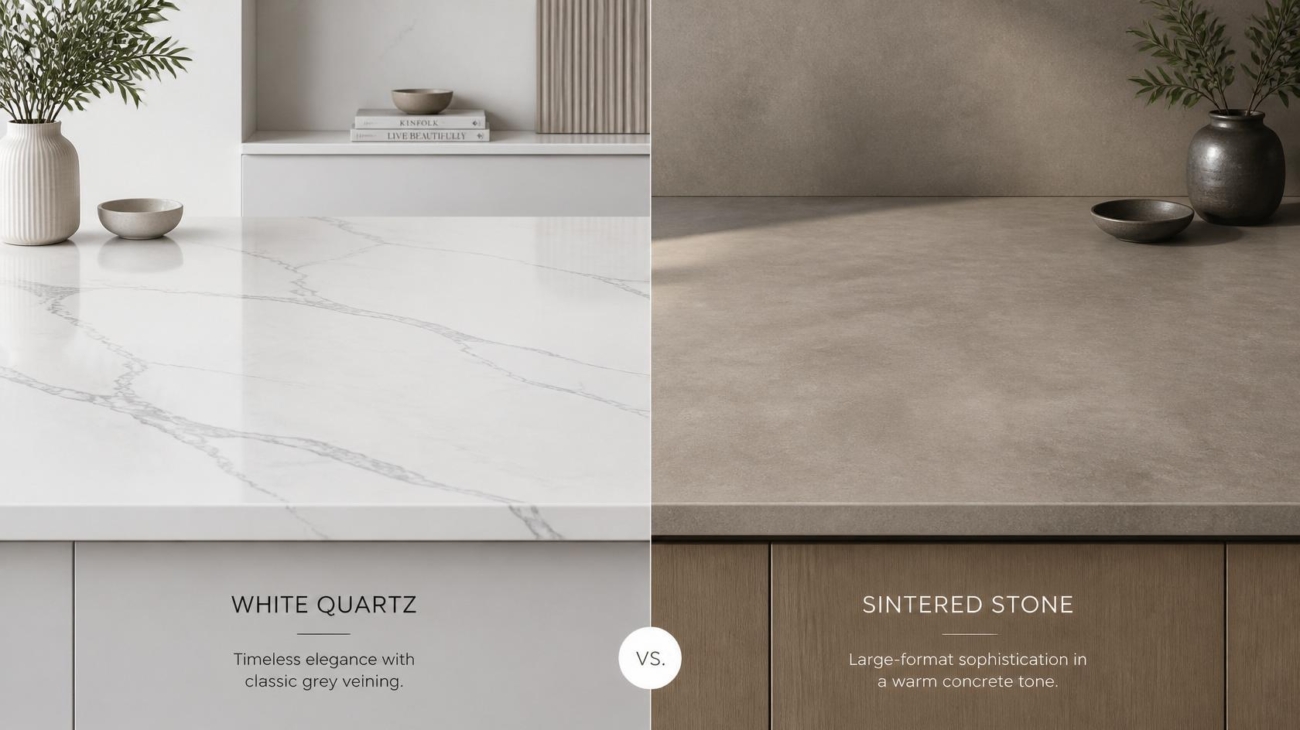
When comparing Quartz vs Sintered Stone, homeowners should consider durability, maintenance, appearance, and everyday usage.
Choosing the right countertop material is one of the most important decisions when designing a kitchen, island, dining table, or workspace. Two of the most popular options in Malaysia today are quartz stone and sintered stone.
Both materials offer modern aesthetics, durability, and low-maintenance performance. However, they are made differently and each has unique characteristics that may suit different lifestyles and applications.
In this guide, we’ll compare quartz vs sintered stone to help you determine which countertop surface is right for your home or commercial project.
This Quartz vs Sintered Stone comparison highlights the strengths of each material.
What Is Quartz Stone?
Quartz stone is an engineered surface made from natural quartz minerals combined with resins and pigments. The manufacturing process creates a dense and consistent material that is widely used for kitchen countertops, vanity tops, worktops, and dining tables.
In the Malaysian market, quartz countertops are commonly available in 15mm and 20mm thicknesses, making them suitable for most residential and commercial interior applications.
Advantages of Quartz Stone
- Wide range of colours and patterns
- Consistent appearance throughout the slab
- Low porosity compared to many natural stones
- Suitable for everyday kitchen use
- Easy to clean and maintain
- Available in various modern and classic designs
Considerations
- Prolonged exposure to excessive heat may affect the resin content
- Primarily recommended for indoor applications
- Direct placement of extremely hot cookware is generally not recommended
What Is Sintered Stone?
Sintered stone is an ultra-compact surface manufactured using advanced technology that applies high pressure and high temperature to natural minerals. The process is designed to replicate how natural stone forms over time.
As a result, sintered stone offers excellent durability and is increasingly popular for modern kitchens, dining tables, feature walls, and commercial spaces.
Advantages of Sintered Stone
- Excellent heat resistance
- Highly resistant to UV exposure
- Suitable for both indoor and selected outdoor applications
- Available in large-format slabs
- Modern and contemporary appearance
- Resistant to stains under normal use and proper maintenance
Considerations
- Fabrication requires specialised equipment and expertise
- Edge detailing options may vary depending on the design
- Professional installation is important to ensure optimal performance
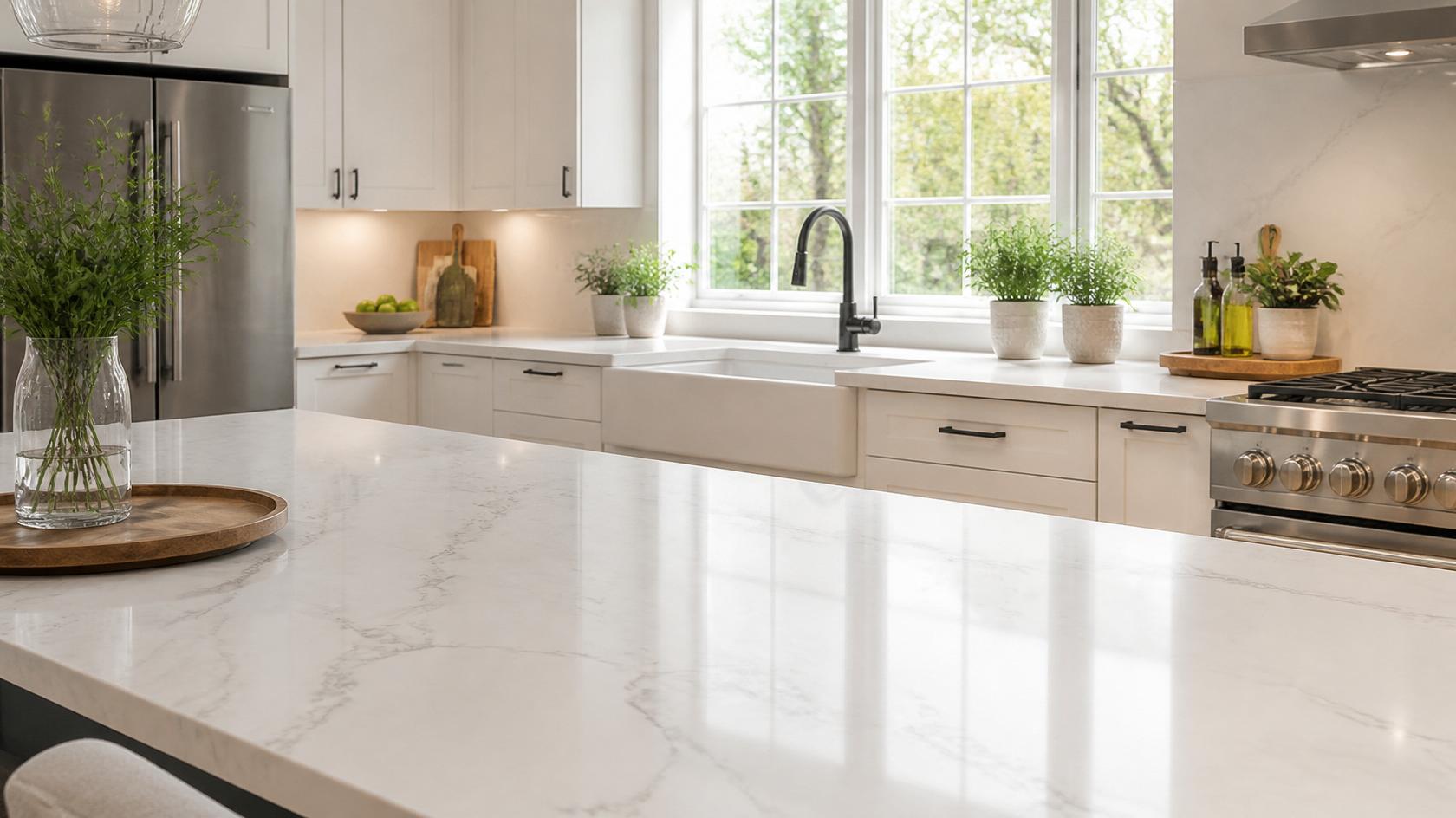
Quartz vs Sintered Stone: Key Differences
1. Heat Resistance
One of the biggest differences between quartz and sintered stone is heat resistance.
Quartz contains resin binders, which means excessive heat may affect the surface over time. While quartz performs well in everyday kitchens, it is generally advisable to use trivets or heat protection when placing hot cookware on the surface.
Sintered stone is manufactured using extremely high temperatures, making it more resistant to heat exposure. This makes it a popular choice for homeowners who cook frequently.
Winner: Sintered Stone
2. Design and Appearance
Both materials offer attractive design options.
Quartz is known for its consistent patterns and colours. It can replicate marble-inspired designs, solid colours, and modern textures with excellent uniformity.
Sintered stone often features natural stone-inspired visuals and contemporary finishes. Many homeowners choose it for its sophisticated and seamless appearance.
Winner: Depends on personal design preference
3. Maintenance Requirements
Both quartz and sintered stone are considered low-maintenance countertop materials.
Daily cleaning typically requires only a soft cloth and mild cleaning solution. Spills should be cleaned promptly to maintain the appearance of the surface.
Neither material should be considered completely maintenance-free, but both are practical choices for busy households.
Winner: Tie
4. Indoor and Outdoor Applications
Quartz is generally recommended for indoor use, including:
- Kitchen countertops
- Island tops
- Dining tables
- Vanity tops
- Worktops
Sintered stone offers greater flexibility and may be suitable for both indoor and selected outdoor applications due to its UV resistance.
Winner: Sintered Stone
5. Fabrication and Installation
Quartz has been widely used in Malaysia for many years, making it a familiar material for countertop fabrication.
Sintered stone requires specialised cutting, handling, and installation techniques due to its density and material characteristics.
Regardless of the material selected, professional fabrication and installation play a major role in the final performance and appearance of the countertop.
Winner: Quartz for fabrication flexibility
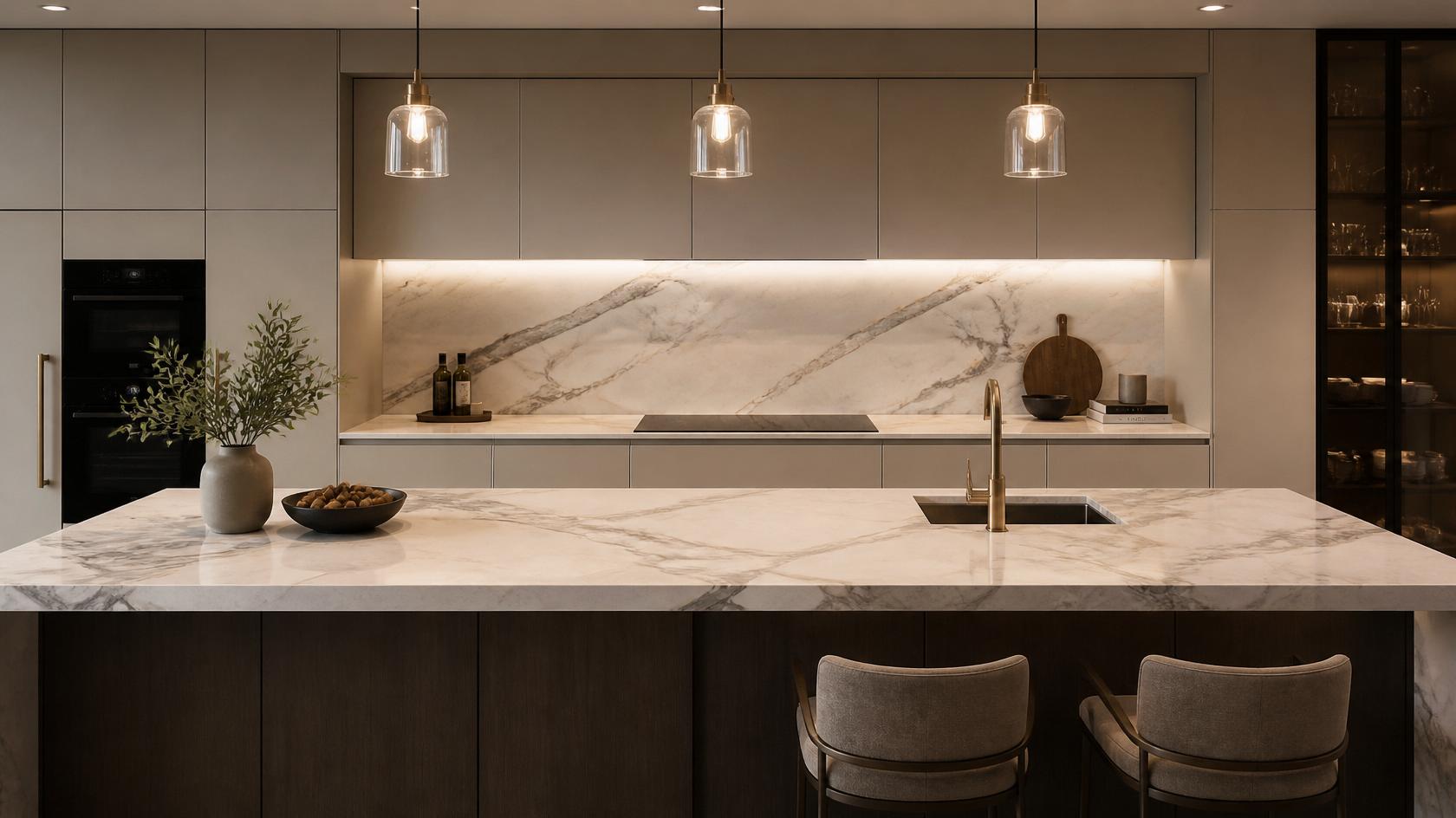
Which Material Is Better for Malaysian Homes?
The answer depends on your lifestyle and project requirements.
Choose Quartz Stone If:
- You prefer a wide variety of colours and patterns
- You want a consistent design appearance
- Your countertop will be used primarily indoors
- You are looking for a practical and low-maintenance surface
- You prefer common thickness options such as 15mm or 20mm
Choose Sintered Stone If:
- Heat resistance is a top priority
- You want a modern ultra-compact surface
- The project may involve exposure to sunlight
- You prefer large-format slab designs
- You want a material suitable for both residential and selected commercial applications
Is quartz stronger than sintered stone?
Both materials are durable and suitable for everyday use. However, they perform differently in areas such as heat resistance and UV exposure.
Can quartz be used for kitchen countertops?
Yes. Quartz remains one of the most popular countertop materials for Malaysian kitchens due to its durability, design variety, and ease of maintenance.
Is sintered stone suitable for outdoor use?
Many sintered stone products are suitable for outdoor applications because they offer good resistance to UV exposure. However, suitability may vary depending on the specific product and installation environment.
Which countertop material requires less maintenance?
Both quartz and sintered stone are considered low-maintenance surfaces when cleaned regularly and used according to manufacturer recommendations.
Add a Comment