
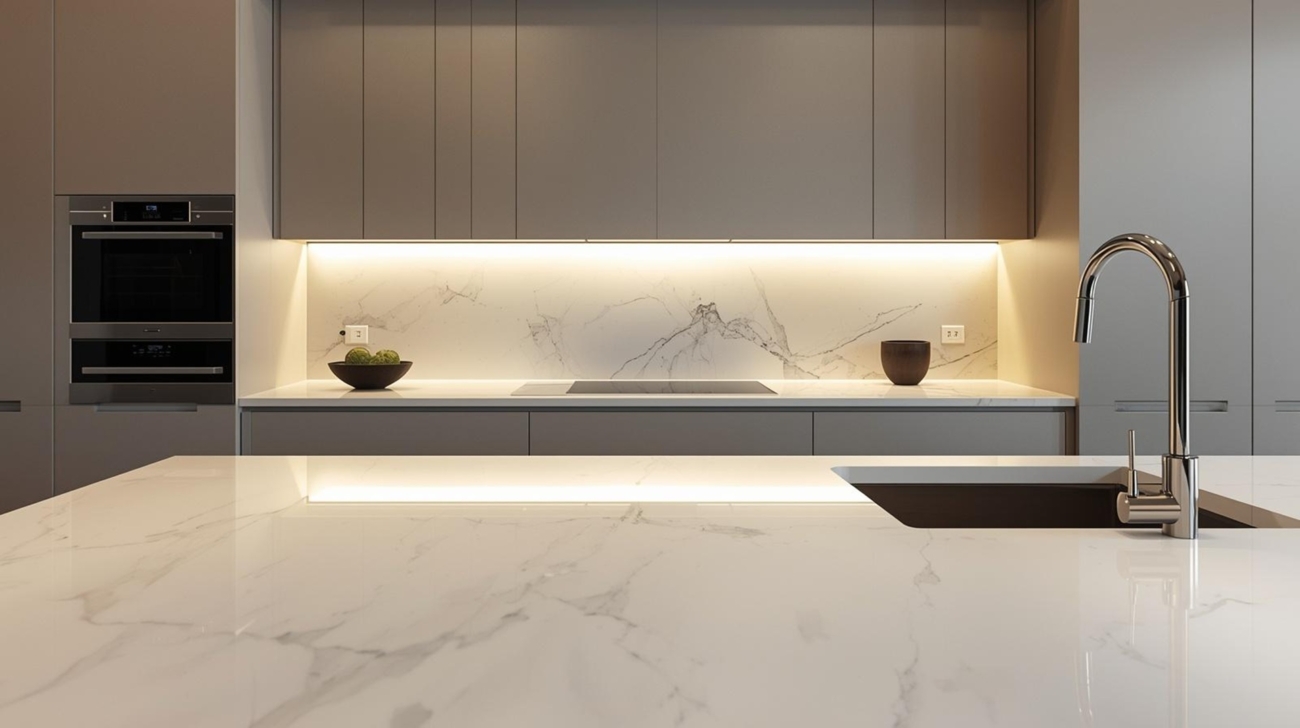
At first, every countertop looks beautiful.
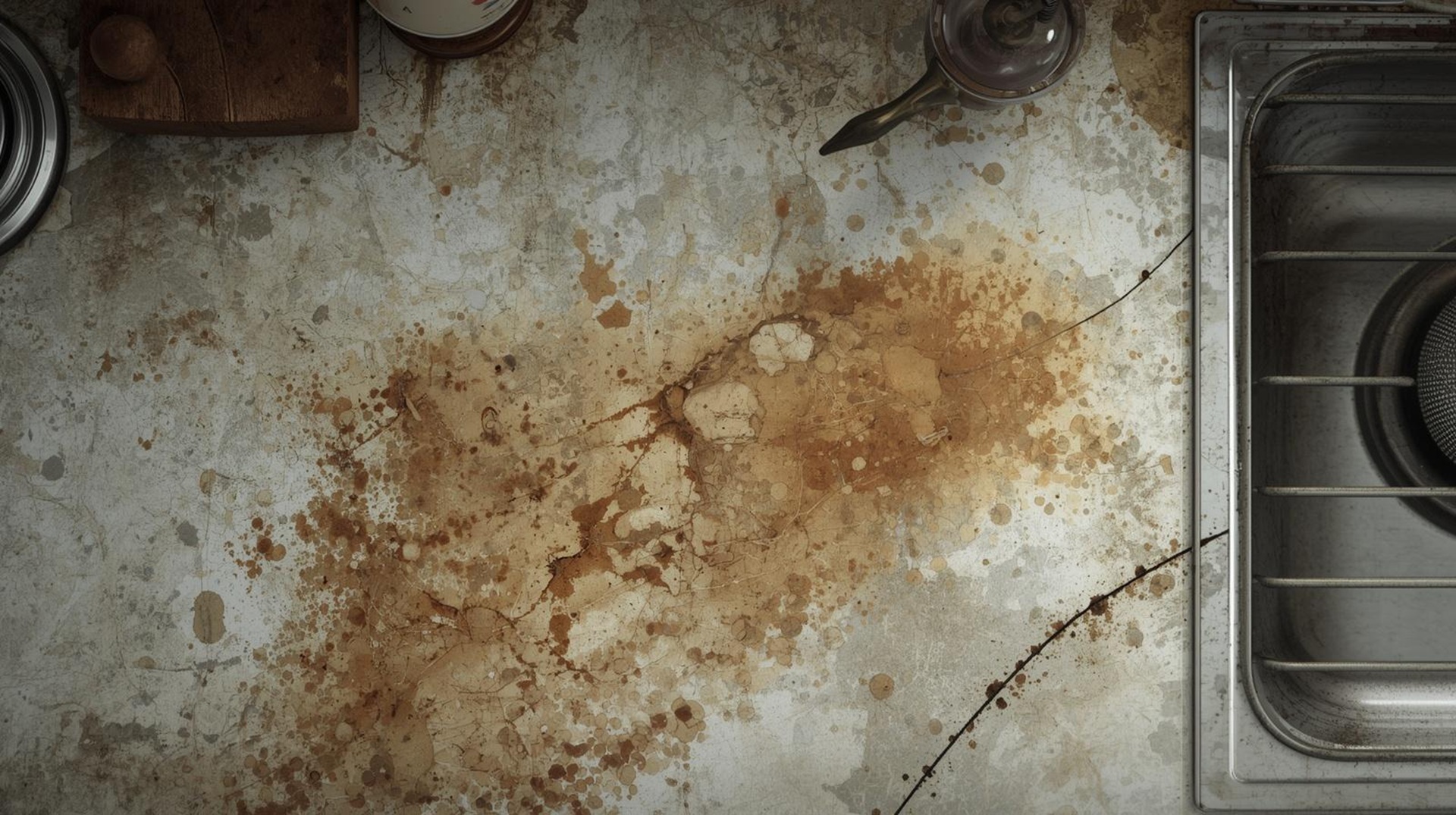
But after a few months, many homeowners begin noticing problems:
- Coffee stains that won’t disappear
- Curry marks absorbed into the surface
- Countertops becoming harder to clean
This is usually not a cleaning issue.
It’s a material issue.
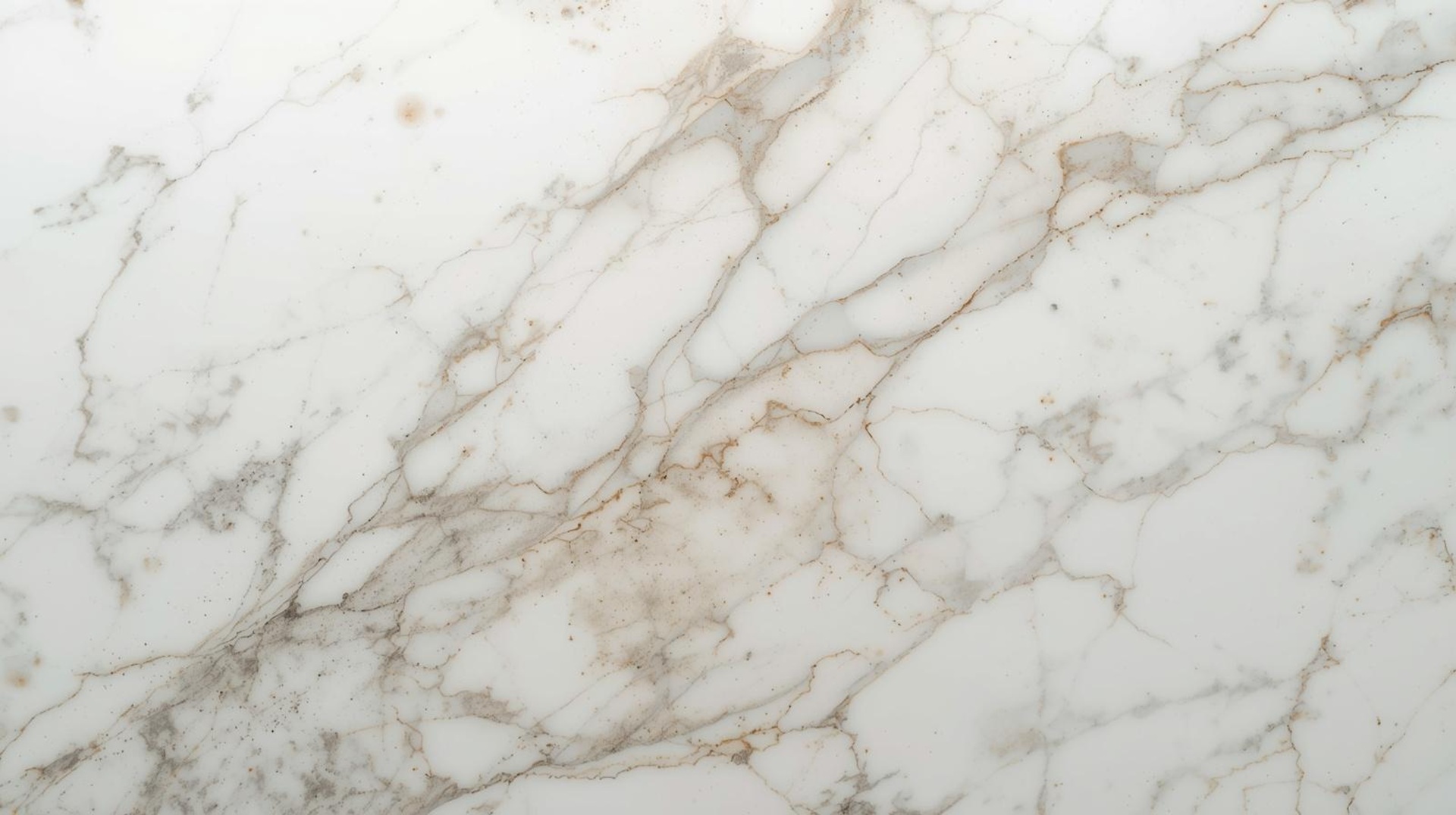
Why Do Countertops Stain?
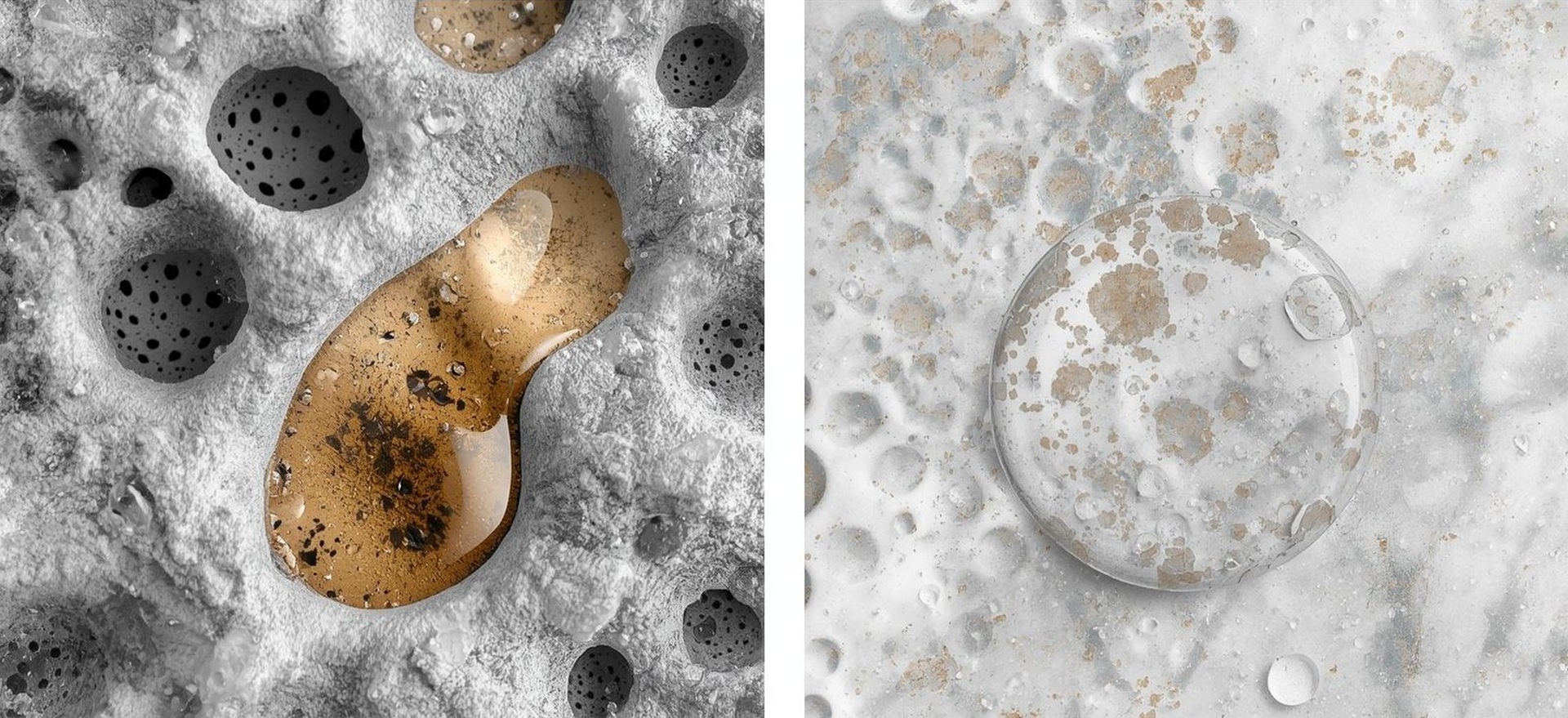
The main reason is porosity.
Some materials contain microscopic pores that absorb liquids like coffee, tea, soy sauce, or curry.
Once absorbed, stains become difficult or even impossible to remove.
👉 Common stain-prone materials include:
While they may look luxurious, they tend to have higher absorption rates, making them less suitable for heavy kitchen use.
Common Mistakes When Choosing a Countertop
Many homeowners unknowingly make these mistakes:
1. Choosing based on appearance only
A beautiful surface doesn’t always mean durable performance.
2. Assuming all stone materials are the same
Different materials vary greatly in structure and functionality.
3. Ignoring the kitchen environment
Kitchens involve frequent use, heat, moisture, and stains—materials must be able to withstand all of these.
How to Choose the Right Material
To ensure long-term durability and easy maintenance:
✔ Choose low-porosity materials
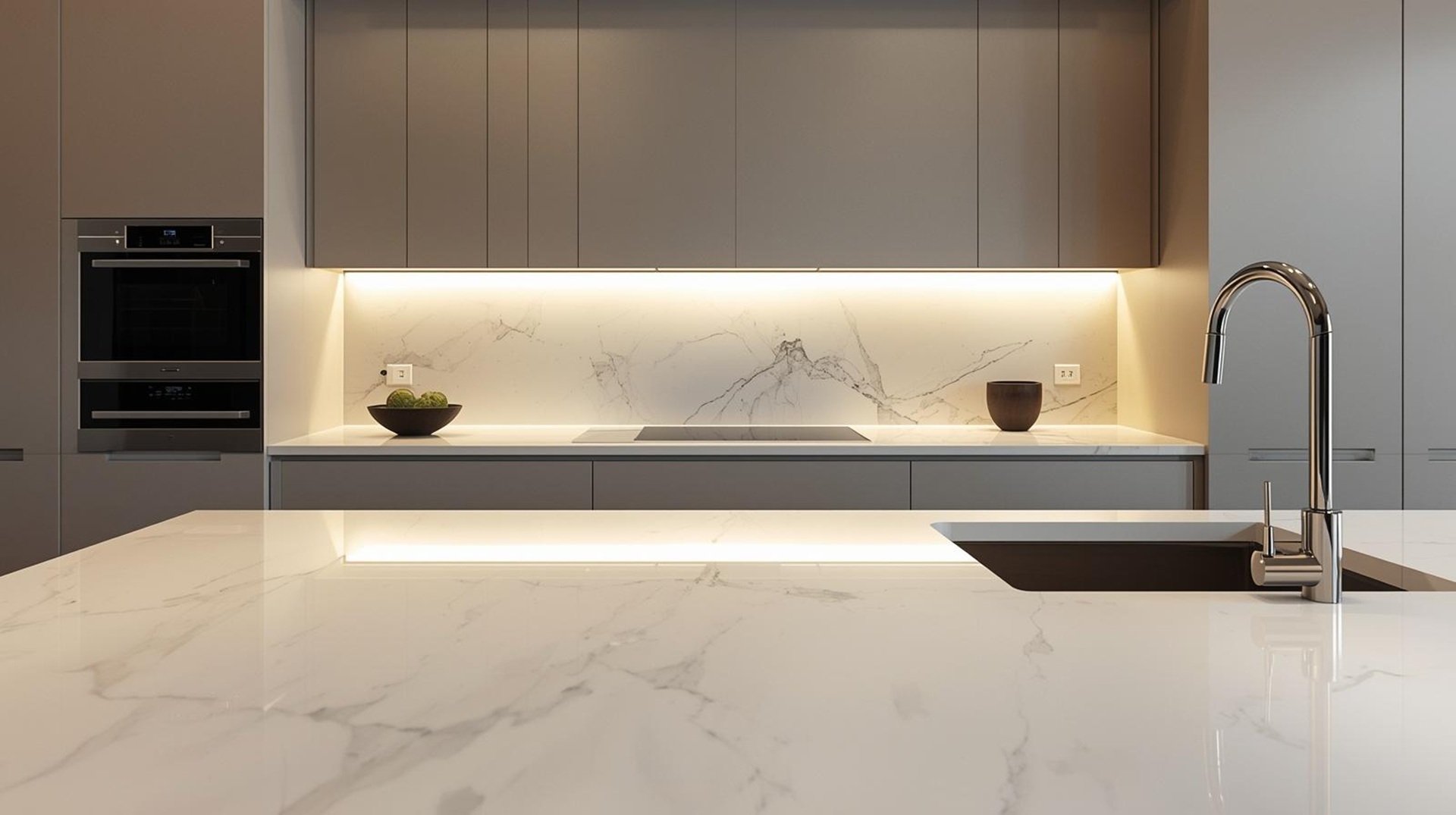
High-quality quartz is a popular choice due to its dense structure and stain resistance.
✔ Prioritize stain resistance & easy cleaning
A good countertop should resist absorption and require minimal upkeep.
✔ Work with a professional supplier
Material quality, fabrication, and installation all affect the final result.
Final Thoughts
Once a countertop is stained, it’s difficult to reverse.
Choosing the right material from the start saves time, cost, and frustration.
👉 A countertop is not just a surface—
it’s the heart of your kitchen.
Why don’t some countertops stain, but mine does?
It usually comes down to material density. Low-porosity materials (like high-quality quartz) resist staining better than natural or lower-grade stones.
Can stained countertops be fixed?
Light stains may be cleaned with professional products. However, deep stains that have penetrated the surface are often permanent and may require polishing or replacement.
Are all quartz countertops stain-resistant?
Not entirely. Quality matters. Higher-grade quartz has better density and performance, so choosing the right brand and supplier is important.
I don’t cook often—can I choose any material?
Not recommended. Even daily use like drinks or sauces can cause stains over time. A countertop is a long-term investment.
What should I prioritize when choosing a countertop?
Look beyond appearance. Focus on:
✔ Stain resistance
✔ Durability
✔ Professional installation & support
Need help choosing the right countertop?
Our team can help you select the ideal material for your kitchen and lifestyle.
Contact us today for professional consultation.